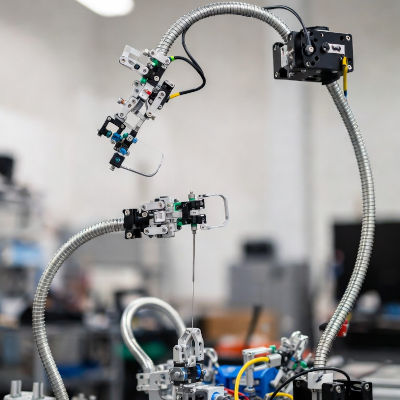

Scientists from Singapore and the US have created a new artificial intelligence (AI) control system for soft robots. Soft robots are made from flexible materials and use actuators that work like artificial muscles to create movement. This flexibility makes them good for gentle tasks, but controlling them is hard because their shapes change in ways that are hard to predict. Real-world settings often have surprises, like wind or weight shifts, which can mess up their actions.
This new system is one of the first to handle trajectory tracking, object placement and whole-body shape regulation at once. It draws from how the human brain learns and adjusts. The study, published in Science Advances, shows how it was built using ideas from robot control, embodied intelligence (where smarts come from the body's interaction with the world), and meta-learning (learning how to learn).
How the system works
The control system has two main parts called synapses, like the connections in the brain. Structural synapses are trained ahead of time on basic moves, such as bending or stretching a soft arm. These give a solid base. Plastic synapses update in real time as the robot works, tweaking actions to fit the moment. A safety measure keeps everything smooth and controlled, even during changes.
Tests on different soft arms showed strong results. The system cut tracking errors by up to 55 percent under heavy disturbances like air flow or broken parts. It kept over 92 percent accuracy in shapes, even with added weight or half the actuators failing. This works across tasks like following paths, placing objects, or shaping the whole body.
The breakthrough could lead to better robots in fields like medicine, where they might help with rehab or assisting people, or in factories for handling delicate items. Future plans include testing in faster, more complex settings to make soft robots safer and more useful in daily life.