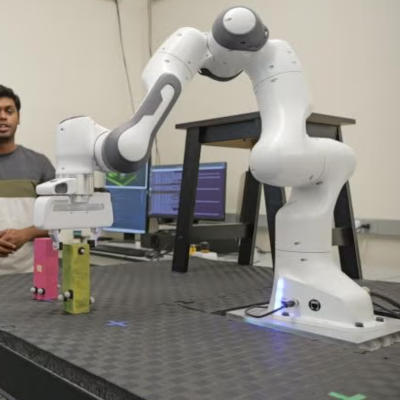

Robots and humans often work side by side in places like factories, where robots handle repetitive tasks quickly, such as assembling car parts, and humans manage complex checks needing skill and flexibility. This setup boosts efficiency in manufacturing, health care, and other fields. However, humans can err or act unexpectedly, creating risks that robots may not anticipate, sometimes leading to serious accidents.
To address this, researchers at CU Boulder created new algorithms. The work was presented at the International Joint Conference on Artificial Intelligence. The algorithms let robots make better choices in uncertain situations involving people, balancing task completion with safety.
The approach draws from game theory, a math idea from economics that studies how players make decisions when others' choices affect results. Here, the robot acts as a player in a game, aiming to "win" by finishing its job, but with humans adding unpredictability. Instead of seeking perfect success, the robot uses an "admissible strategy," which means a plan to achieve as much as possible while reducing harm, especially to people.
Minimizing regret for better interactions
To avoid seeming aggressive, the algorithms include the idea of regret, where the robot picks actions it won't later wish it avoided. In a factory example, if a human errs, the robot might correct it safely or move the work to a secure spot to finish alone. Like a chess player thinking ahead, the robot predicts possible human moves and plans responses, but without assuming perfect foresight.
The focus is on robots adapting to humans, whether beginners or experts, covering all scenarios. This promotes safe teamwork, where robots' precision and strength combine with human judgment and adaptability. As a result, robots can fill gaps in areas like elder care or tough jobs, easing worker strain and expanding human capabilities overall. When used well, this collaboration brings real benefits to society by making tasks safer and more effective.