
An international team of researchers has made a technology breakthrough in one of the most important forms of biological light imaging, "optical coherence tomography" (OCT). The finding could revolutionize applications in ophthalmology, dermatology, cardiology, and the early detection of cancer.
OCT imaging relies on backscattered light in tissues (when light passes between different layers of cells, for example). But there's a limit to imaging quality (think driving very slowly with headlights on in a fog). In bio tissue, the limit is about 1 millimeter (well beyond conventional microscopy).
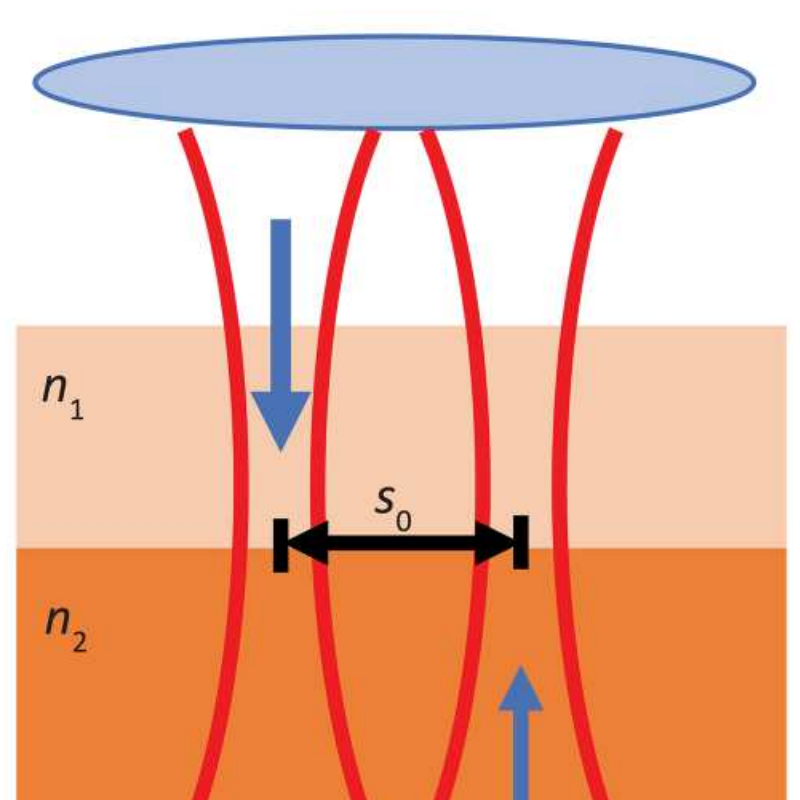
Now an international team of researchers* has found a counterintuitive workaround: increase the scattering, using multiple paths and different depths, as explained in Science Advances journal.
* The University of Adelaide (Australia), Technical University of Denmark, Aerospace Corporation (USA) and academics from the School of Physics and Astronomy at the University of St Andrews (Scotland).
Citation: Untracht, G. R., Chen, M., Wijesinghe, P., Mas, J., Yura, H. T., Marti, D., Andersen, P. E., & Dholakia, K. (2023). Spatially offset optical coherence tomography: Leveraging multiple scattering for high-contrast imaging at depth in turbid media. Science Advances, Volume 9 | Issue 27 July 2023. https://doi.org/adh5435 (open-access)
