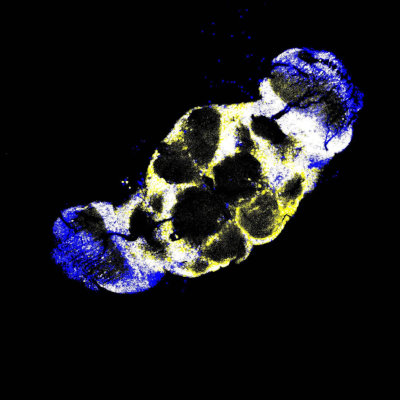

Scientists have puzzled over why some memories last while others fade for more than a century. Recent work from the Stowers Institute provides the first clear proof that the nervous system, which controls body signals and thoughts, can intentionally create tightly packed protein fibers called amyloids to store long-term memories from sensory experiences. This finding changes old beliefs about memory and the risks of amyloid buildup in the brain, and it may lead to fresh ways to handle disorders tied to amyloids.
The study, to be published in PNAS, focuses on how unstable proteins help form steady memories. Researchers used fruit flies to show that the system can make a protein form an amyloid at an exact time, place, and in response to a certain event. Amyloids are usually seen as bad because they clump harmfully in diseases like Alzheimer's, Huntington's, and Parkinson's, killing brain cells and erasing memories. But this research proves some amyloids are useful and controlled, acting as tools to keep information.
A key role for chaperone proteins
The breakthrough came from studying chaperone proteins, which are helpers that guide other proteins to fold right or stop bad clumping. In the nervous system, one type of chaperone does the opposite: it lets proteins change shape to form helpful amyloids for memory. Named Funes after a story about perfect recall, this chaperone was found by testing 30 kinds in fly brains. Flies with more Funes remembered smells linked to rewards much better after a day, a sign of long-term memory.
Earlier work in 2020 showed amyloids aid memory in animals from sea slugs to humans, but not how or when. Now, with Funes identified, researchers can test ways to control it. This might activate chaperones to make toxic amyloids less harmful or boost the brain's ability to form good ones, fighting disease effects. The study also hints at links to human conditions like schizophrenia, where similar genes appear in studies. Starting from simple sea slugs, this opens an exciting but unknown area of chaperone biology for brain health.