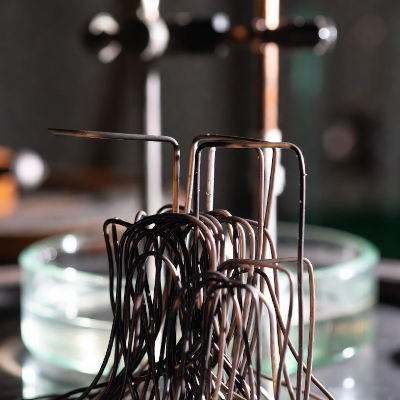

Scientists have created a new way to control very small fibers made of carbon using electricity. Microfibers are threads thinner than a human hair. This control allows the fibers to change shape precisely and go back to their original form. The work, published in Nature Communications, shows early results on how these fibers move due to uneven chemical reactions involving electricity.
In the past, making such tiny fibers was hard, but now methods exist to produce them from various materials. Smart materials can alter their traits, like shape or color, when exposed to things such as heat, light, or electricity. These materials find use in sensors, clothing, and medicine. For fibers, efforts have focused on creating ones that respond to signals for tasks like acting as artificial muscles or releasing drugs at certain conditions. However, many need special coatings or changes to work well, making them tough to make. Controlling their movement accurately remains a big issue.
How the control works
The new approach uses plain carbon fibers, known for being strong yet light and having good electrical traits. Scientists place a single fiber in a bipolar cell, an electrochemical setup from the 1970s used in sensors and batteries. Here, ions from a liquid solution enter the fiber unevenly when voltage is applied. The fibers tested were either smooth or rough on one side. The rough ones have uneven pores, tiny holes, causing ions to insert differently on each side. This makes the fiber bend. When the voltage reverses, ions leave, and the fiber straightens.
This bending happens without wires attached to the fiber, thanks to oxidation and reduction - gaining or losing electrons - at opposite ends. The amount of bend depends on voltage strength and fiber length. Short voltage pulses can make the fiber move up and down like tiny tweezers. This could lead to small actuators, devices that create motion, for use in microrobotics or handling materials at tiny scales. The uneven surface of the fiber is key to starting this motion.