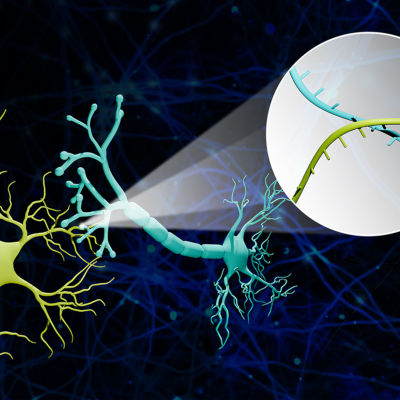

Researchers have developed a new method to map connections in the mouse brain quickly and with high detail. The technique, called Connectome-seq, tags individual neurons with unique RNA barcodes. RNA is a molecule that carries genetic information inside cells. A barcode here is like a short, unique label that identifies each neuron.
Specialized proteins move these RNA barcodes from the main body of the neuron to the synapse. A synapse is the tiny junction where one neuron passes signals to another. Researchers then collect the synapses and read the barcodes using high-throughput sequencing, a fast way to decode many genetic labels at once. This reveals exactly which neurons connect to each other at the level of individual synapses.
The researchers compared the brain to a computer. Engineers need to know the exact wiring of a computer's central processing unit to understand how it works, improve it, or repair it. The same idea applies to the brain. Traditional brain mapping requires slicing tissue thinly, imaging it under microscopes, and reconstructing pathways by hand. This process is slow. Older sequencing methods can label many neurons but often cannot show precise partner connections at synapses.
Connectome-seq turns the mapping task into a sequencing task
In tests, the researchers mapped more than 1,000 neurons in the pontocerebellar circuit, a pathway linking two brain regions. The method uncovered previously unknown direct links between certain cell types in adult mice. With ongoing improvements, the approach may scale to map connections across the entire mouse brain.
The speed and scale of Connectome-seq could speed up studies of brain function, circuit problems in disease, and changes during neurodegeneration. By comparing healthy and diseased brains, scientists may spot vulnerable connections early, before symptoms appear, and explore ways to strengthen them.
The researchers have described the methods and results of this study in a paper published in Nature Methods.