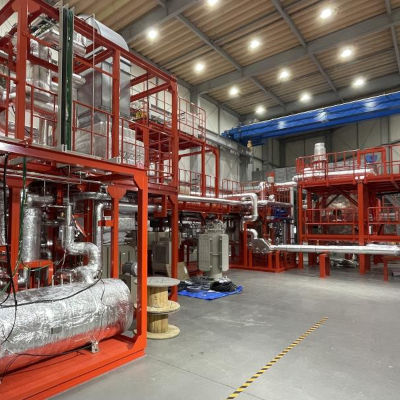

The U.S. Department of Energy has announced a strategic partnership with Kyoto Fusioneering, a company focused on fusion technology. This leads to a new agreement between Oak Ridge National Laboratory and Kyoto Fusioneering. The goal is to use their combined knowledge to push forward nuclear fusion energy. They plan to build special testing setups to check and improve tritium breeding blanket systems. Tritium is a rare fuel used in fusion reactions, and breeding blankets are parts inside fusion reactors that make more tritium while also turning heat into electricity.
This work aims to create UNITY-3, a top-level testing site at Oak Ridge National Laboratory. It will simulate real fusion conditions to test blanket designs, helping to make sure they work safely and efficiently. The partnership supports both research and business aims, and it lowers risks for building fusion pilot plants, which are early versions of full-scale power stations. UNITY-3 builds on Kyoto Fusioneering's existing UNITY program, including facilities in Japan and Canada for testing blankets and fuel cycles.
Advancing critical fusion components
Through this effort, the groups will fill important gaps in fusion science, as outlined in government roadmaps. They will raise the readiness of blanket and fuel systems for real use. Oak Ridge National Laboratory brings skills in supercomputing, materials study, and manufacturing to design and build these advanced parts. Kyoto Fusioneering adds expertise in heating systems, fuel processing, and blankets for power generation. Leaders from both sides note that this joint work turns ideas into practical tools, strengthening the fusion industry through public and private ties.
They already have joint projects under programs like INFUSE, which looks at blanket materials, and FIRE, which studies liquid metal concepts. Beyond the new facility, they will plan ways to turn tech into products and share experts. This setup follows a strategy to build, innovate, and grow fusion energy, aiming for a reliable, low-carbon power future.