
Scientists led by the Princeton Plasma Physics Laboratory (PPPL) have created a new computing system called STELLAR-AI to help solve problems in fusion energy research. Fusion energy is a process that joins atomic nuclei to release huge amounts of clean power, like the sun does. The system uses artificial intelligence (AI) and high-performance computing.
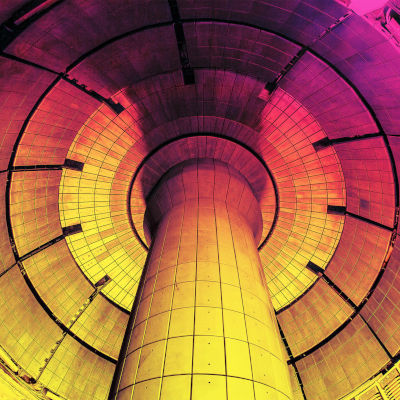
The goal is to end delays in running digital models (simulations). that predict how fusion devices will work. These simulations and the related AI training can take months now, but STELLAR-AI aims to make them much quicker. It connects computers directly to real experiments, such as the National Spherical Torus Experiment-Upgrade, a machine that tests fusion ideas. This lets researchers check data right away during tests.
STELLAR-AI builds a strong base for fusion work by linking simulations, experiments, and AI. It helps design better fusion systems that are cheap to build and run. Fusion involves many connected parts, so AI and fast computing are key to finding the best setups.
Integrating advanced hardware for fusion challenges
The platform mixes different computer parts: central processing units (CPUs); graphics processing units (GPUs) for AI's parallel math; and quantum processing units (QPUs) that use quantum physics rules to solve hard problems faster than normal computers.
This setup tackles issues for companies trying to make fusion power real. One use is a digital twin, a virtual copy of a fusion machine for safe testing. Another is StellFoundry, an AI tool to design stellarators, twisted fusion devices that might work better than others. Designing them needs sorting vast data, which STELLAR-AI speeds up.
The project fits into a bigger U.S. plan called the Genesis Mission, which uses AI to boost science discoveries. It also follows a roadmap to make fusion plants commercial, giving clean energy for things like advanced AI. Partners from labs, universities, tech firms, and fusion companies bring skills to make proven AI tools for the field.
This work makes the Princeton Plasma Physics Laboratory a center for fusion progress. With decades of plasma physics research and tools like the experiment machine, it helps speed up safe, endless energy from fusion.