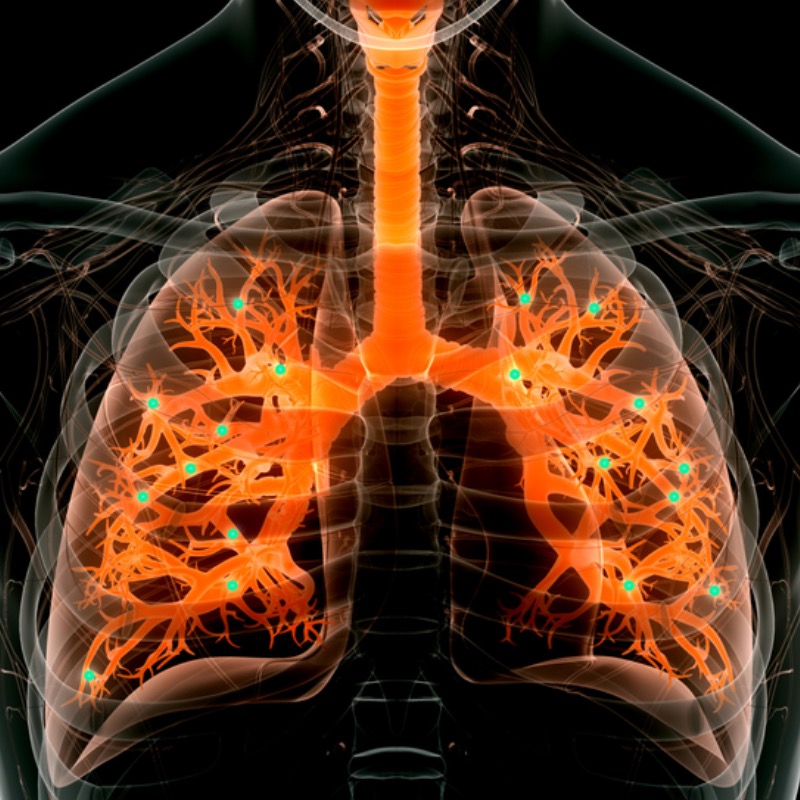

Engineers at MIT and the University of Massachusetts Medical School have designed a new type of nanoparticle that can be administered to the lungs, where it can deliver messenger RNA for encoding useful proteins.
With further development, these particles could offer an inhalable treatment for cystic fibrosis and other diseases of the lung, the researchers say.
Treating or repairing a range of genetic diseases
"We are hopeful that [these particles] can be used to treat or repair a range of genetic diseases, including cystic fibrosis,” says Daniel Anderson, a professor in MIT’s Department of Chemical Engineering and a member of MIT’s Koch Institute for Integrative Cancer Research and Institute for Medical Engineering and Science (IMES).
In a study of mice, Anderson and his colleagues used the particles to deliver mRNA encoding the machinery needed for CRISPR/Cas9 gene editing. That could open the door to designing therapeutic nanoparticles that can snip out and replace disease-causing genes.
Particle structure designed to be most likely to reach the lungs
The particles are made up of molecules that contain two parts: a positively charged headgroup and a long lipid tail. The positive charge of the headgroup helps the particles to interact with negatively charged mRNA, and it also help mRNA to escape from the cellular structures that engulf the particles once they enter cells.
The lipid tail structure, meanwhile, helps the particles to pass through the cell membrane. The researchers came up with 10 different chemical structures for the lipid tails, along with 72 different headgroups. By screening different combinations of these structures in mice, the researchers were able to identify those that were most likely to reach the lungs.
They are now working on making their nanoparticles more stable, so they could be aerosolized and inhaled using a nebulizer.
Promising therapeutic lung gene delivery applications
“This achievement paves the way for promising therapeutic lung gene delivery applications for various lung diseases,” says Dan Peer, director of the Laboratory of Precision NanoMedicine at Tel Aviv University, who was not involved in the study. “This platform holds several advantages compared to conventional vaccines and therapies, including that it’s cell-free, enables rapid manufacturing, and has high versatility and a favorable safety profile.”
The study appears March 30, 2023 in Nature Biotechnology.