
Researchers led by King’s College London have developed a new way to simulate robots that can sense touch, inspired by animals like cats and elephants. This is also covered in another press release issued by Beijing Institute of Technology Press.
This method, called SimTac, uses computer models to design and test artificial sensors quickly. Tactile robots are machines with a sense of touch, created by adding many sensors to parts like robotic hands. These sensors help robots handle objects with more skill, much like humans do. The study, published in Cyborg and Bionic Systems, shows how this simulation can replace slow trial-and-error building. In the past, making one prototype could take up to 18 months, with no promise it would work well. This has slowed progress in areas like factory robots that pick items or advanced artificial limbs for people.
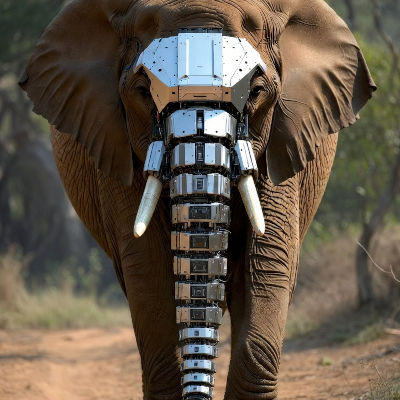
SimTac works by creating virtual versions of sensors based on real-world objects. It draws from nature's designs, such as the sensitive paws of cats or the flexible trunks of elephants. An elephant trunk has about 400,000 nerves, making it very good at feeling things. By simulating these shapes, the approach explores new ideas for sensor forms that are not just flat, like a fingertip. For example, a flat sensor might struggle to lift thin paper, but a curved or tentacle-like one could do it better. This expands options for building physical robots in much less time.
Advancing robot training with AI
The researchers also combined SimTac with another tool called GenForce, an artificial intelligence (AI) model that copies how the human brain learns to feel force and grip objects. GenForce trains the whole robot using data from just one sensor, instead of needing many expensive ones.
High-accuracy sensors can cost over 10,000 pounds each, so this saves money for industries like manufacturing. By turning force data into 2D images, the system helps the robot remember how to touch things after one try, like training a hand with input from a single finger. In the future, this could lead to fully built robots with nature-inspired touch, improving what they can do in everyday tasks.