
Machine-learning models learn from data to predict outcomes and suggest experiments for discovering new materials. However, most models only use limited types of information. In contrast, human scientists draw from many sources, like past research, chemical mixes, images of material structures, and expert advice.
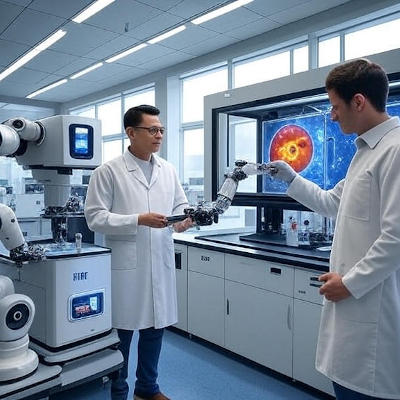
Researchers have now created a method to improve material recipes and plan tests by combining data from various places, such as scientific papers, chemical formulas, and microscope images. This method, published in Nature, is part of a new system called Copilot for Real-world Experimental Scientists, or CRESt. CRESt includes robots for quick testing of many materials, with results sent back to advanced computer models to refine recipes further.
Scientists can talk to the system using everyday language, without needing to write code. The system makes its own notes and ideas during experiments. It also uses cameras and visual computer models to watch tests, spot problems, and suggest fixes.
Experiments are often planned with active learning, a machine method that smartly uses past data to pick new tests, combined with Bayesian optimization to recommend next steps based on probabilities.
How CRESt improves the process
CRESt builds on these by adding more human-like knowledge while keeping automation's speed. Its robots handle mixing liquids, heating materials quickly, testing electricity, and checking structures with tools like electron microscopes. It can mix up to 20 starting chemicals.
To guide designs, models search papers for useful element details. Humans start by asking for promising recipes, triggering robot work. Data from tests trains models to suggest more, using math like principal component analysis to simplify complex info and focus searches.
CRESt watched its own tests for issues, like odd sample shapes, and proposed solutions, improving reliability. In one use, it tested over 900 chemical mixes and 3,500 electrical checks, finding a catalyst for fuel cells using formate salt to make power. This new mix, with eight elements, boosted power output nine times per cost over pure palladium, a costly metal, while using less precious materials.
This shows CRESt's potential to solve long-standing energy material challenges faster. It acts as a helper, explaining actions in words, but humans still guide and fix most issues.