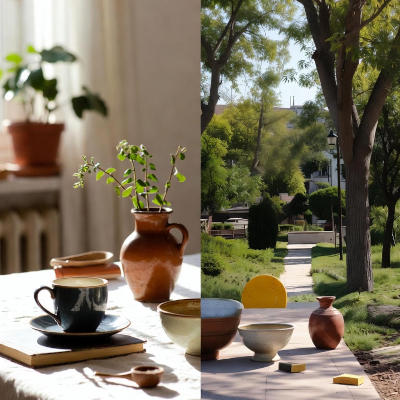

Current methods for 3D reconstruction, which means building digital models of real-world spaces, often require tools like LiDAR, a laser-based scanning device, or 3D scanners to measure areas accurately. They can also involve fixing thousands of photos with exact camera pose information, where camera pose refers to the position and direction from which a photo is taken. These steps make the process slow and hard to use widely. Researchers at KAIST have created a new approach called SHARE, short for Shape-Ray Estimation, that rebuilds 3D scenes from only two or three regular photos without needing exact camera details upfront.
This innovation works for small items on a table or large outdoor areas. It suggests a shift where any camera-captured space can turn into a virtual model right away.
How SHARE overcomes limitations
Unlike older techniques that start with known camera poses to figure out 3D shapes, SHARE pulls spatial details directly from the images. It estimates both the 3D scene and camera orientations at the same time, aligning photos from different angles into one clear model without distortions. This makes it efficient and flexible for real settings, with no extra training or setup needed.
Research leader Sung-Eui Yoon noted that SHARE lowers barriers for 3D work, letting people use just a smartphone for high-quality results in fields like building design, media production, and games. It could also help in robotics and self-driving cars by making cheap simulation spaces. The researchers have described the methods and results of this study in a preprint titled "Pose-free 3D Gaussian splatting via shape-ray estimation," published in arXiv.The findings were shared at the IEEE International Conference on Image Processing in 2025, earning the Best Student Paper Award out of 643 papers. This highlights the method's strong potential to change how virtual environments are made, making the process faster and cheaper.