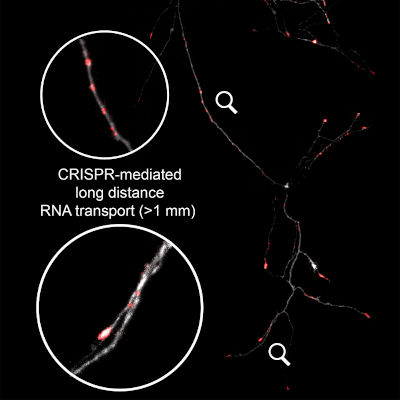

When a neuron gets injured, RNA, a molecule that carries genetic instructions, produces proteins to fix the damage. In diseases like ALS, a condition causing muscle weakness, or spinal muscular atrophy, a disorder affecting movement, RNA fails to reach the injured areas. Spinal cord injuries also disrupt this process. Without RNA in the right place, damage becomes permanent.
Stanford researchers developed a technology to move RNA to specific spots in a neuron. This helps repair and regrow cell parts. Their work introduces “spatial RNA medicine,” a new treatment approach for neurological diseases and injuries. They use CRISPR, a gene-editing tool, to guide RNA precisely. This technology targets damaged neuron sites for repair and growth.
“For the first time, we’ve harnessed the power of CRISPR technology to create a precise spatial ‘zip code’ that delivers RNA molecules exactly where they’re needed within cells,” says research leader Stanley Qi in a Stanford press release.
A CRISPR-based delivery system
RNA’s location in a cell matters as much as its function. Neurons can be very long, and aging or injury stops RNA from traveling far. The new technology, called CRISPR-TO, uses CRISPR-Cas13, a version of CRISPR, to move RNA without editing it. Instead of cutting genetic code, Cas13 acts like a delivery system. Researchers add location signals, like addresses, to guide RNA to specific cell parts.
In experiments, researchers tested CRISPR-TO on mouse brain neurons in a lab dish. They moved RNA to neurites, fingerlike extensions that connect neurons. One RNA increased neurite growth by 50% in 24 hours. The researchers say this tool opens new ways to treat neurodegenerative diseases, which harm brain cells.
The researchers continue testing CRISPR-TO to find the best RNA for repairing neurons in mice and human cells. They aim to understand how RNA placement aids brain repair. This technology could also improve RNA-based medicines by delivering them exactly where needed, making treatments safer and more effective. Precise RNA delivery could transform therapies for various diseases by targeting specific cell locations at the right time.