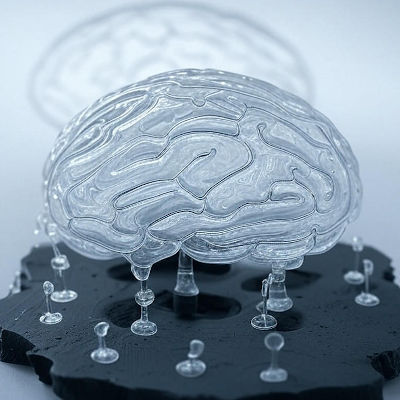

Scientists found a new way to make microelectrode arrays, or MEAs. MEAs are tools that record brain activity and stimulate nerve tissues. Regular MEAs stay flat, so they struggle to fit the brain’s natural curves. Older methods to add 3D shapes take many steps, which complicates things and limits designs.
The new method, called μETF, draws from plastic thermoforming. Thermoforming molds plastic sheets into shapes by heating and pressing them.
A study published in npj Flexible Electronics describes the new method.
The scientists got the idea from watching how plastic coffee cup lids form. They thought this could work for tiny electrodes too.
With μETF, the scientists heat a thin, bendy sheet with tiny electrodes and press it onto a 3D-printed mold. They use liquid crystal polymer, or LCP, for the sheet. LCP is strong, safe for the body, and lasts a long time. This creates bumps and dips that bring electrodes closer to neurons, keeping the electrodes working well electrically. Unlike older ways, μETF makes complex shapes like wells, domes, and triangles in one go.
This technology might power brain-computer interfaces (BCIs)
The scientists tested μETF by making a 3D MEA for retinal stimulation in blind people. Tests and computer models showed these 3D electrodes work better than flat ones. They need 1.7 times less power and focus 2.2 times sharper. Closeness to neurons boosts efficiency and accuracy.
This technology could help beyond the retina. The scientists see it working for brain, spinal cord, ear, and nerve interfaces. They think this technology might power brain-computer interfaces, or BCIs. A 3D MEA in the motor cortex, which controls movement, could decode signals to move robotic arms or wheelchairs for paralyzed people.
The scientists plan to tweak the method for more medical uses. With simpler steps and better results, μETF pushes neural technology forward. It could improve treatments for brain and nerve problems.