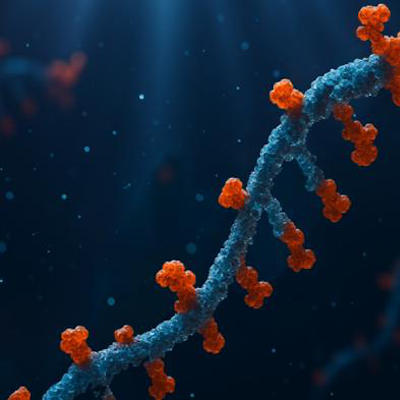

Scientists at University of Sydney and other institutions have developed a system called PROTEUS to design and improve molecules inside mammal cells. This system uses biological artificial intelligence - a method that combines principles of artificial intelligence (AI) with biological processes - to create molecules with new or better functions. These molecules can help develop more precise tools for research or improve treatments like gene therapies, which fix faulty genes to treat diseases.
PROTEUS stands for PROTein Evolution Using Selection. It relies on directed evolution, a lab process that speeds up natural evolution, where molecules change and improve over time. Normally, evolution takes years, but PROTEUS completes this in weeks by testing millions of molecule variations to find the best ones. This could lead to better medicines, such as improving CRISPR, a gene-editing tool that cuts and edits DNA, making it more effective.
A breakthrough in molecular design
Unlike older methods that worked in bacterial cells, PROTEUS evolves molecules directly in mammal cells, which are closer to human cells. This makes it more relevant for creating treatments for human diseases. For example, PROTEUS can solve complex problems, like turning off a disease-causing gene. Scientists give PROTEUS a problem, and it tests many possible solutions, finding molecules that work best. The findings were published in Nature Communications.
The system has already created improved proteins and tiny versions of antibodies to detect DNA damage, a key factor in cancer. PROTEUS is versatile and can enhance most proteins or molecules. To ensure the system works reliably, scientists used chimeric virus-like particles, combining parts of different viruses to keep cells stable during evolution and prevent incorrect solutions.
PROTEUS is open source, meaning other researchers can use it freely. Scientists hope it will improve gene-editing tools or mRNA medicines, like those used in COVID vaccines, for stronger, more targeted effects. This system builds on directed evolution, which won a Nobel Prize in 2018, and could transform how new medicines and tools are developed.