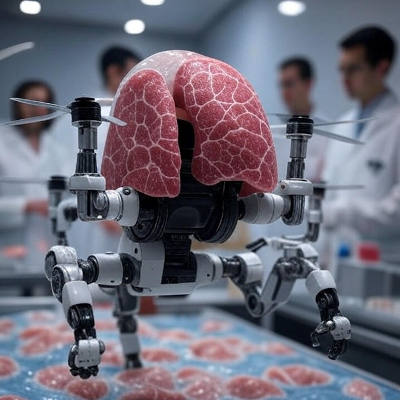

Scientists at Carnegie Mellon University have created a new method to build small biological robots called AggreBots. These are tiny machines made from living cells that can move on their own. Biobots are microscopic devices built from biological materials that can perform tasks like delivering medicine. In the past, many biobots used muscle fibers to move by contracting and relaxing, similar to how muscles work in animals. This new approach uses cilia instead. Cilia are tiny hair-like parts on cells that wave back and forth to push fluids or help movement, like in lungs or some swimming creatures.
The method involves putting together small balls of cells called spheroids, made from lung stem cells. Stem cells are basic cells that can grow into different types. Some spheroids have a genetic change that makes their cilia not work in certain spots. By mixing working and non-working spheroids into different shapes, scientists can control where the moving cilia are placed and direct how the AggreBots move.
How the robots are built and tested
The AggreBots are put together in a modular way, meaning like building blocks, to customize their structure. This controls their speed and direction. Because they are made from biological materials, they break down naturally and are safe for the body. Tests show they can be shaped to achieve specific movement patterns. This could help in medicine, like sending treatments inside the body without immune problems, since they can use a patient's own cells.
The work helps understand diseases where cilia do not work right, such as primary ciliary dyskinesia, a condition that affects breathing and movement of fluids. It also aids studies on thick mucus in cystic fibrosis, a lung disease. In the future, these robots might deliver drugs or fix issues in hard-to-reach places. This study is published in Science Advances.