
A research team led by Cleveland Clinic and Oregon Health and Science University (OHSU) has developed a new method for mapping how the parts of the brain "speak" to each other. This is critical to understanding behavior changes in patients with neurological disease, according to the researchers.
"Effects on behavior and personality in Alzheimer's disease and related disorders are caused by changes in brain function," says Cleveland Clinic's Hod Dana, PhD. "If we can understand exactly how the changes occur, we may figure out how to slow down the process or to stop it.
Mapping brain activity noninvasingly
Recording brain activity patterns that underlie behavioral changes is the first step to bridging the gap, say the researchers.
The team recently published results in Nature Communications on using a calcium sensor system called CaMPARI (Calcium-modulated photoactivatable ratiometric integrator) to map brain activity in preclinical models while completing cognitive tasks.
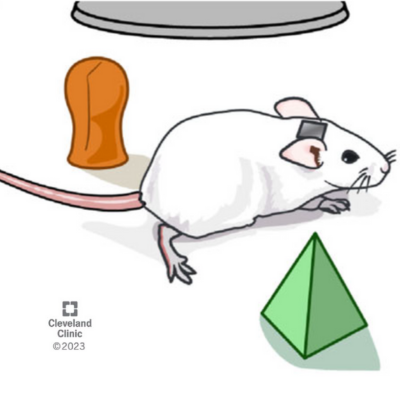
Current technologies are unable to map the whole brain while still identifying the single cells. The researchers were able to do cortex-wide activity recording without any head fixation, tethering, or attachment of a miniaturized device to the mouse’s head. Multiple cortical regions were recorded while the mouse was performing a battery of behavioral and cognitive tests.
How Alzheimer's-related genes affect learning and memory
The goal is to see how Alzheimer's-related genes affect the way our neurons signal through our brains in learning and memory. The researchers hope to take what they learn from their results to develop tests and interventions that can improve the quality of life for patients, providing better treatment options.
"We now have the capability to study the relationship between brain activation and cognitive performance at an unprecedented level," says Jacob Raber, PhD, an OHSU behavioral neuroscientist.
"These are the first steps in developing strategies to reverse those changes and improve cognitive performance in those affected by neurological conditions. The future of behavioral and cognitive neuroscience looks bright."
Citation: Das, A., Holden, S., Borovicka, J., Icardi, J., Chaklai, A., Patel, D., Patel, R., Kaech Petrie, S., Raber, J., & Dana, H. (2023). Large-scale recording of neuronal activity in freely-moving mice at cellular resolution. Nature Communications, 14(1), 1-12. https://doi.org/10.1038/s41467-023-42083-y (open-access)
