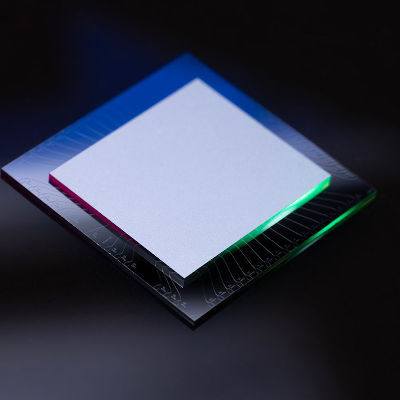

Amazon has announced Ocelot, its first quantum chip, developed by researchers at Amazon Web Services and Caltech.
Amazon claims that this chip marks a big step in building quantum computers that work well and don’t need too many parts. Ocelot uses superconducting circuits. This design helps Ocelot tackle quantum error correction, a way to fix mistakes in quantum computing caused by outside noise like heat or vibrations.
The chip brings three key improvements. First, it creates a scalable structure for bosonic error correction. This method relies on bosons, instead of simple two-state qubit systems, to more effectively protect quantum information from environmental noise and to do more efficient error correction.This beats older methods that need more parts to fix errors.
Second, Ocelot features a noise-biased gate, a tool that cuts down errors efficiently, making it easier to build bigger quantum computers. Third, it delivers high performance for superconducting qubits, tiny units that store quantum info. Ocelot’s qubits last nearly one second before bit-flip errors happen, and 20 microseconds before phase-flip errors occur.
A Caltech press release has more information. The researchers have described Ocelot and preliminary research results in a paper published in Nature. MIT Technology Review has covered the launch of Ocelot (unpaywalled copy).
Toward practical quantum computing
Quantum computers promise to solve tough problems way faster than regular computers. But today’s quantum machines struggle with noise, limiting them to about a thousand quantum gates before errors ruin everything.
Ocelot aims to bridge this gap with smarter error correction. By spreading one logical qubit’s info across several physical qubits, it shields data from noise and fixes mistakes.
Traditional error correction needs thousands of physical qubits per logical qubit, making big quantum computers hard to build. Ocelot changes that with cat qubits, named after a famous thought experiment. These qubits use oscillators to store info. Adding more energy, or photons, cuts bit-flip errors sharply, so fewer qubits are needed. Tests show Ocelot’s design works well, reducing errors as it scales up.
Amazon believes Ocelot could slash resource needs by 90% compared to older methods, paving the way for practical quantum computing that could transform society.