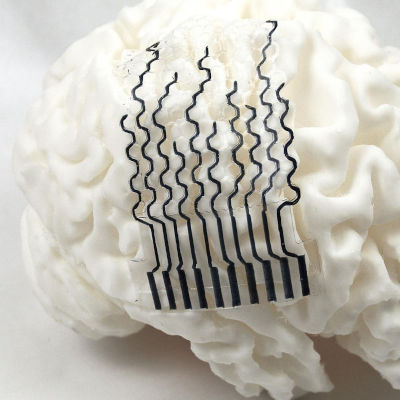

Researchers have developed soft electrodes that can closely match the unique surface of a person's brain. These bioelectrodes are tiny sensors that detect electrical signals from brain activity. Traditional versions use stiff materials in standard shapes that often fit poorly on the brain's folded surface. The new method uses three-dimensional printing to create flexible electrodes tailored to each individual.
The process begins with an MRI scan of a patient's brain. Software then creates a detailed computer model and shapes the electrode to follow the brain's exact ridges and grooves. The electrodes are printed from a soft, water-rich material known as hydrogel. This material is gentle on living tissue. A special honeycomb pattern inside the structure gives the electrodes strength and stretchiness while using less material, which lowers cost and production time.
Personalized neural interfaces improve brain monitoring
The brain's outer layer has folds created by a process called gyrification. This folding forms raised areas known as gyri and grooves known as sulci. It allows a large surface area to fit inside the skull and helps brain cells communicate quickly. Although the main folds are similar across people, the exact pattern differs based on factors such as height, weight, age, and sex. The new electrodes conform more precisely to these differences than standard designs. As a result, they make better contact with the brain, produce clearer signals, and avoid damaging tissue or interfering with fluid flow around the brain.
Tests on physical models of 21 human brains showed the printed electrodes fit more accurately. In rat studies lasting 28 days, the electrodes caused no immune reaction, stayed stable, and recorded signals reliably. The approach avoids the need for expensive clean-room facilities and could allow faster, cheaper production of custom devices.
This technology may support better monitoring of neurodegenerative diseases and could one day help deliver targeted treatments. Further work aims to adapt the electrodes for specific medical conditions and test them in human patients.
This research is published in Advanced Materials.