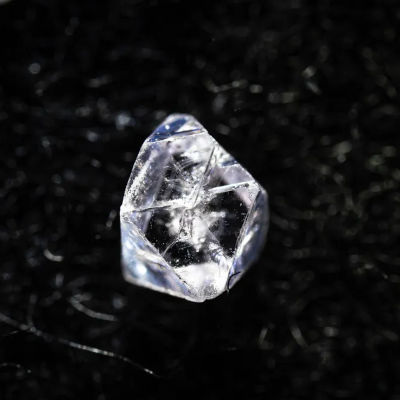

Researchers at Linköping University have created a quantum bit, or qubit, using perovskite materials for the first time. Perovskites are a family of crystals known for their useful properties in solar cells and other technologies. A qubit is the basic unit of information in a quantum computer.
The qubit relies on the spin of electrons, which can point in different directions and store quantum information. Many experts thought this would not work in perovskites because the atoms interact strongly and would cause the quantum state to collapse too quickly. Experiments showed that the spin qubits remain stable long enough for potential use.
Perovskite materials open new path for practical quantum computing
Quantum computers can handle complex calculations far beyond the reach of today’s supercomputers by using superposition. Superposition allows a qubit to exist in multiple states at once, rather than just zero or one. Common qubits today use superconducting materials that must be cooled to nearly absolute zero, the lowest possible temperature. This requires large, expensive cooling systems and makes scaling difficult.
Another approach uses spin qubits created with defects in materials such as diamond, but producing these is costly and energy-intensive. The Linköping researchers developed a simpler method by mixing chemicals and heating them to about 480 degrees Celsius to grow perovskite crystals in the laboratory. They added chromium to tune the properties, producing crystals that shimmer with a rose-like color. This chemical process allows quick, cheap, and controllable creation of the qubits.
The new qubits can operate at higher temperatures than superconducting ones and convert their signals into optical light signals for potential quantum communication. The researchers believe the approach could lead to more affordable and scalable quantum computers in the future, with perovskites becoming as common as silicon in electronics.
The researchers have described the methods and results of this study in a paper published in Nature Communications.