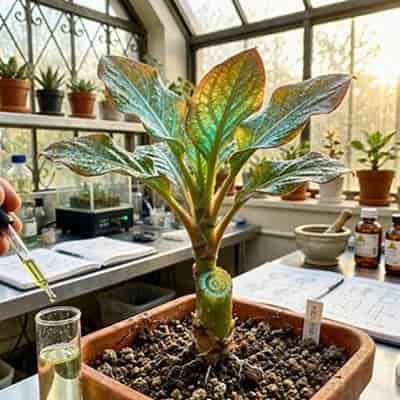

UBC Okanagan researchers have deciphered the long-sought biosynthetic pathway of the rare plant compound mitraphylline, a spirooxindole alkaloid with documented anticancer activity. The findings, published in The Plant Cell, detail the identification of two enzymes that orchestrate the formation of the molecule’s characteristic twisted ring structure—a feature known to be critical for its ability to interact with cancer cells.
Mitraphylline naturally occurs only in trace amounts in tropical trees like kratom (Mitragyna speciosa) and cat's claw (Uncaria tomentosa), making extraction costly and unsustainable. The new work, which builds on the team’s 2023 discovery of an enzyme capable of creating the basic spirooxindole scaffold, now identifies the missing steps: one enzyme folds the molecular skeleton into the correct 3‑D configuration, while the second completes the assembly into mitraphylline.
“This is similar to finding the missing links in an assembly line,” explains project lead Dr. Thu‑Thuy Dang, holder of the UBC Okanagan Principal’s Research Chair in Natural Products Biotechnology. The discovery was driven by PhD student Tuan‑Anh Nguyen and involved collaboration with Dr. Satya Nadakuduti’s lab at the University of Florida.
The research opens a "green chemistry" route to producing mitraphylline without harvesting endangered trees. The team now aims to adapt the plant's molecular tools to create a wider range of therapeutic compounds.