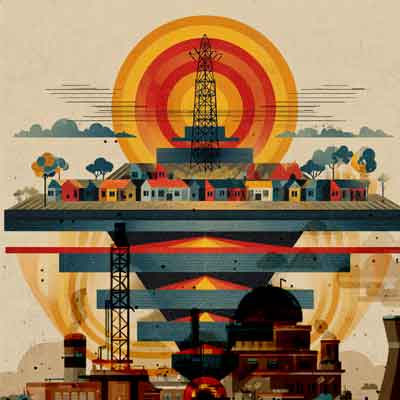

Nearly 750 million people still live without reliable electricity today.
Yet the future of power may not arrive through massive dams or national grids, but through thousands of small, intelligent energy systems operating locally. Decentralized energy grids—networks of solar panels, batteries, and smart software—are quietly redefining how electricity is produced, owned, and shared.
The deeper shift is philosophical as much as technological: electricity may be evolving from centralized utility service into a community-managed digital commons.
For over a century, electricity systems followed a centralized model: large power plants transmitted energy across vast networks to passive consumers. This architecture worked well for industrial economies but proved costly and slow to expand in regions with dispersed populations or limited infrastructure investment.
Today, declining renewable energy costs, advances in battery storage, and AI-driven grid management are enabling a different approach. Instead of waiting decades for national grid expansion, communities can deploy modular microgrids powered by solar, wind, or hybrid renewable systems.
This transformation aligns with broader technological shifts toward decentralization across finance, computing, and communication. The tension lies between efficiency and resilience: centralized grids optimize scale, while decentralized systems optimize adaptability and local autonomy.
From Power Plants to Power Networks
Traditional electricity systems depend on centralized generation facilities. Energy flows in one direction—from producer to consumer—requiring massive infrastructure investments and complex maintenance.
Decentralized grids reverse this logic. Households, farms, and businesses become “prosumers,” simultaneously generating and consuming electricity. Solar panels and localized storage systems allow energy to be produced closer to where it is used.
Instead of a single failure causing widespread outages, distributed networks isolate disruptions. Power becomes modular rather than monolithic.
Why this matters:
Energy resilience increases dramatically when electricity production is distributed rather than concentrated.
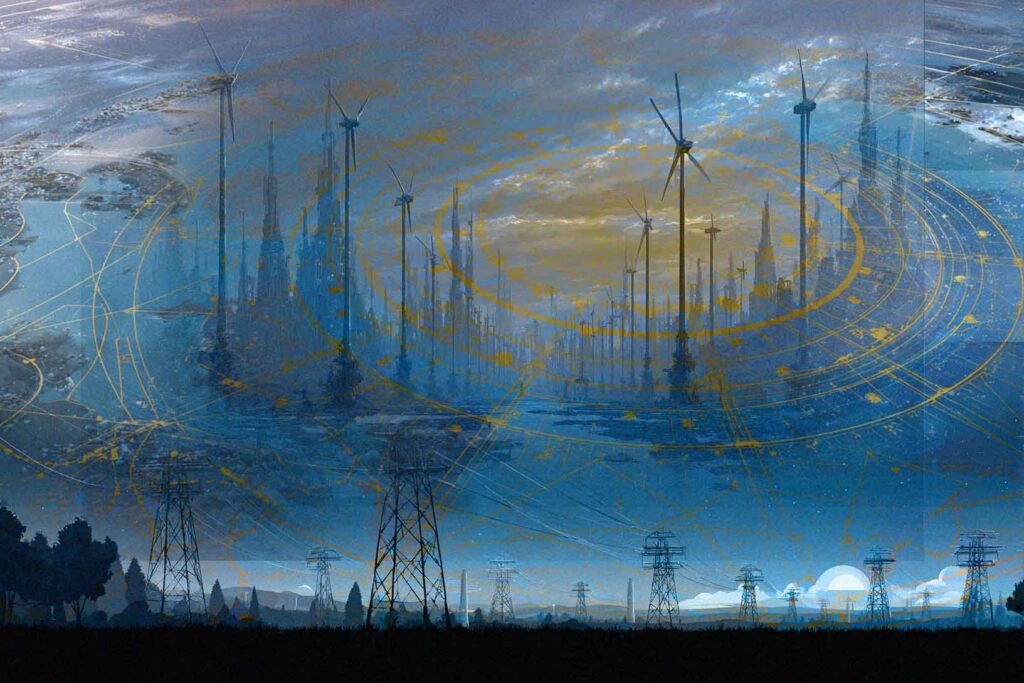
Microgrids as Leapfrog Infrastructure
Emerging economies often face a paradox: building traditional grids requires enormous capital, yet lack of electricity limits economic growth needed to justify that investment.
Microgrids bypass this dilemma. Small-scale renewable systems can be deployed rapidly, serving villages, industrial clusters, or urban neighborhoods independently or semi-independently from national grids.
These systems scale incrementally. Communities expand capacity as demand grows, avoiding massive upfront costs typical of centralized infrastructure projects.
Why this matters:
Decentralized energy allows development without replicating the slow industrial pathways followed by wealthier nations.
Intelligence at the Edge: AI-Managed Energy
Managing decentralized power requires coordination. Energy production fluctuates with sunlight, weather, and consumption patterns, creating complex balancing challenges.
AI-driven energy management systems forecast demand, optimize battery storage usage, and automatically route electricity where needed. Algorithms predict peak consumption and dynamically adjust distribution in real time.
Edge computing enables decisions to occur locally rather than relying on distant control centers, improving responsiveness and reducing operational costs.
Why this matters:
Software—not just hardware—is becoming the backbone of modern energy systems.
Energy as a Local Economic Engine
Reliable electricity fundamentally reshapes local economies. Small businesses operate longer hours, cold storage reduces agricultural waste, and digital services become viable in previously underserved regions.
Decentralized grids also create new economic roles: installation technicians, battery maintenance specialists, and energy data managers. Communities shift from energy dependence to energy participation.
Some systems allow peer-to-peer energy trading, where surplus electricity can be sold within local networks, creating micro-energy markets.
Why this matters:
Energy access transforms from a development outcome into a development driver.
The Limits of Decentralization
Despite strong promise, decentralized systems face challenges. Battery costs, financing models, and regulatory uncertainty can slow adoption.
Grid interoperability presents another obstacle. National utilities must adapt to networks they do not fully control, raising questions about pricing, stability, and oversight.
There is also a risk of uneven deployment, where wealthier communities adopt advanced systems faster, potentially widening energy inequality.
Why this matters:
Technological solutions succeed only when governance and policy evolve alongside them.
Climate Adaptation and Energy Sovereignty
Climate change increasingly disrupts centralized power systems through extreme weather events. Distributed grids offer resilience by reducing reliance on vulnerable transmission infrastructure.
Local ownership of energy resources also strengthens energy sovereignty. Communities gain control over pricing, maintenance decisions, and long-term planning rather than depending solely on distant authorities.
In regions historically shaped by energy imports or colonial resource extraction, decentralized energy represents a structural shift toward autonomy.
Why this matters:
Energy independence may become a cornerstone of climate adaptation and political stability.
Ethics & Societal Implications
Decentralized energy challenges traditional power hierarchies—both electrical and political. Control over electricity historically shaped industrial growth and governance authority. Localized grids redistribute that control, potentially empowering communities long excluded from infrastructure planning.
However, decentralization also introduces responsibility. Communities must manage maintenance, governance decisions, and equitable access internally. Without inclusive frameworks, local elites could capture benefits, replicating inequality at smaller scales.
There is also a philosophical shift underway. Electricity transitions from invisible background infrastructure into an actively managed shared resource. This transformation raises questions about collective stewardship: when energy becomes communal, who decides how it is used, priced, or prioritized?
Conclusion
Decentralized energy grids represent more than a technological upgrade—they redefine humanity’s relationship with power itself. Instead of waiting for centralized expansion, communities can build energy systems that grow organically alongside their needs.
If successful, distributed energy could mark the end of structural electricity scarcity in emerging economies, turning power generation into a participatory ecosystem rather than a distant service. The real transformation may not be cheaper electricity, but a new model of infrastructure ownership.
The future question is no longer how nations deliver electricity—but whether communities themselves will become the power plants of the 21st century.