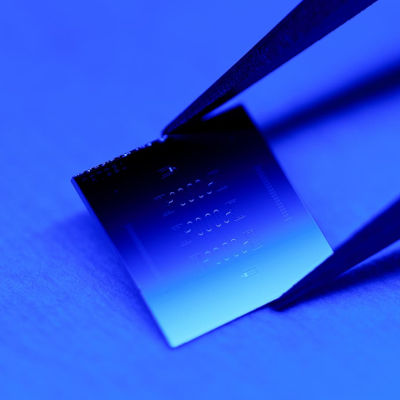

Princeton engineers have created a new type of qubit, the basic building block of quantum computers. A qubit is like a regular computer bit but can hold multiple states at once due to quantum effects. This allows quantum computers to solve very hard problems that normal computers cannot handle. However, qubits lose their information quickly, which has limited progress. The new qubit lasts over one millisecond, three times longer than the best previous lab results and nearly 15 times longer than those in large industry systems like those from Google and IBM.
The design is based on a transmon qubit, a superconducting circuit that works at very cold temperatures to avoid resistance in electricity flow. Superconducting means materials conduct power without losing energy. The engineers used tantalum, a tough metal, on a silicon base, which is common in regular computing. This combination reduces energy loss from tiny flaws in materials, extending coherence time - the period a qubit holds quantum data without errors.
Key improvements in qubit design
To achieve this, the researchers solved challenges in combining tantalum and silicon, removing contaminants and measuring remaining energy losses. Tantalum withstands harsh cleaning, and silicon provides high purity. They built a full quantum chip to test it, showing it could fit into existing processors. Swapping this qubit into Google's Willow system could make it 1,000 times better, with gains growing exponentially as more qubits are added.
This breakthrough addresses major hurdles like scaling up systems and correcting errors, which multiply in larger setups. Better qubits mean fewer errors and easier fixes. The work stems from collaboration in materials science and quantum design, funded by U.S. government centers. Experts say it revives stalled progress in qubit lifetimes. With this advance, practical quantum computers for science could emerge by the decade's end, moving from experimental to useful tools.
The engineers have described the methods and results of this study in a paper published in Nature.