
Scientists at the University of Arizona, ICFO, and Ludwig Maximilian University, have found a way to measure and manage quantum uncertainty in real time. They used very fast pulses of light to do this. The work, published in Nature (Light: Science & Applications), may help create safer ways to send information and faster quantum light systems.
The main idea involves squeezed light, which is a special type of light where the uncertainty is not even. In normal light, uncertainty spreads equally, like air in a round balloon. In squeezed light, one part gets more precise and quiet, while the other becomes noisier, like stretching the balloon into an oval shape. This method is used in gravitational wave detectors.
Before, squeezed light used slow pulses that last milliseconds. The researchers wanted shorter pulses.
How the method works
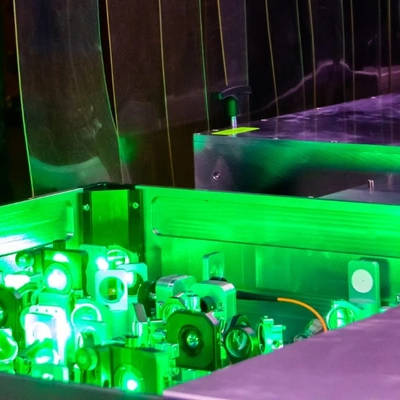
They made short light bursts with a process called four-wave mixing, where different light beams mix inside a material like fused silica, a type of glass. They split one laser into three beams and aimed them at the silica. By changing the angle, they controlled when photons, which are tiny light particles, arrive. If straight on, photons come together; a small tilt makes one lag, switching the squeeze between intensity, or strength, and phase, the position in a wave.
This is the first time anyone has shown ultrafast squeezed light and direct control of uncertainty. For secure communications, it mixes speed with quantum safety. If someone tries to spy, the system notices, and the method makes it harder for them to get correct data because they need exact details on the light's strength changes.
Looking ahead, this could improve quantum sensing for better measurements, help in chemistry for new drugs, and in biology for precise tests. It may also lead to tools that watch the environment with great sensitivity.