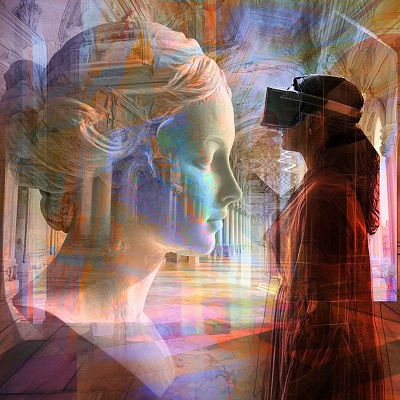

Imagine standing amid the skeletal remains of an ancient amphitheater and, through augmented reality glasses, witnessing its grandeur reanimated—columns rising, statues glistening, voices echoing through time. This is not speculative fiction, but the evolving frontier of immersive technologies in cultural heritage. By integrating virtual reality (VR), augmented reality (AR), mixed reality (MR), and artificial intelligence (AI), these tools are reshaping how societies preserve, experience, and engage with their past.
Cultural heritage, encompassing tangible monuments and intangible traditions, has long been threatened by decay, conflict, and inaccessibility. Today, immersive technologies offer more than just a digital mirror—they act as interpretive lenses, transforming passive observation into multisensory participation. Yet, as these tools gain traction, they bring with them a new matrix of technical, ethical, and epistemological challenges that demand careful scrutiny.
The Expanding Capabilities of Immersive Systems
Immersive technologies blur the line between physical reality and digitally reconstructed environments. Devices such as head-mounted displays, interactive touchscreens, projection systems, haptic feedback gloves, and mobile AR applications create multisensory encounters that reconstruct lost worlds or illuminate the invisible layers of cultural artifacts.
This expansion is not merely aesthetic. Enhanced reconstruction workflows use laser scanning and photogrammetry to capture site geometries with millimeter precision. These datasets feed into immersive platforms that allow real-time, multi-user interaction in reconstructed environments. Visitors can traverse a digitized medieval cathedral, inspect ancient ceramics in 3D, or train in underwater archaeology through simulated dives—all from remote locations. The potential to bridge temporal and spatial divides is substantial, particularly for educational and preservation-focused institutions.
In museum settings, these tools are revolutionizing engagement. Adaptive AR guides respond to user inputs, offering customized narratives. VR modules enable tactile simulations of fragile artifacts, allowing visitors to "handle" objects otherwise locked behind glass. AI-driven storytelling further personalizes these experiences, dynamically adjusting historical narratives based on user interests and demographics.
Strengths Driving a New Cultural Paradigm
Several transformative advantages are already visible. Immersive technologies deepen cognitive and emotional engagement, translating static exhibits into narrative-driven explorations. They enable personalization and real-time feedback, allowing learners and visitors to construct knowledge at their own pace and from multiple perspectives.
They also extend the accessibility of cultural heritage beyond geography and mobility constraints. Digitally reconstructed sites offer access to individuals who may never physically visit the originals, including those with disabilities or living in conflict zones. Moreover, community-based digitization platforms allow local populations to co-create virtual archives, fostering inclusive representations and cross-cultural understanding.
In education, immersive platforms enrich learning environments. Beyond the classroom, they serve as scalable tools for remote training, from digital fieldwork simulations to AI-curated cultural studies curricula. They also facilitate intergenerational and intercultural exchange, anchoring cultural knowledge in interactive formats that appeal to younger audiences.
Persistent and Emerging Challenges
Despite their promise, immersive technologies pose intricate challenges. Foremost are technical barriers: system complexity, lack of interoperability, and dependence on specialized hardware. Museums and heritage institutions—particularly in developing regions—often lack the infrastructure or funding required to adopt and maintain these systems. Legacy preservation strategies are ill-equipped to handle the fast-evolving landscape of immersive display technologies.
User experience also suffers from inconsistent standards. Overly guided experiences can restrict user agency, while poorly optimized interfaces may cause disorientation or cognitive overload. The risk of VR-induced motion sickness remains unresolved in many deployments.
Equally concerning are sustainability and maintenance issues. Immersive installations require continual software updates, hardware replacements, and content moderation. Without long-term institutional support, these systems may become obsolete, compromising their value as archival tools.
Ethical Complexities and Cultural Risks
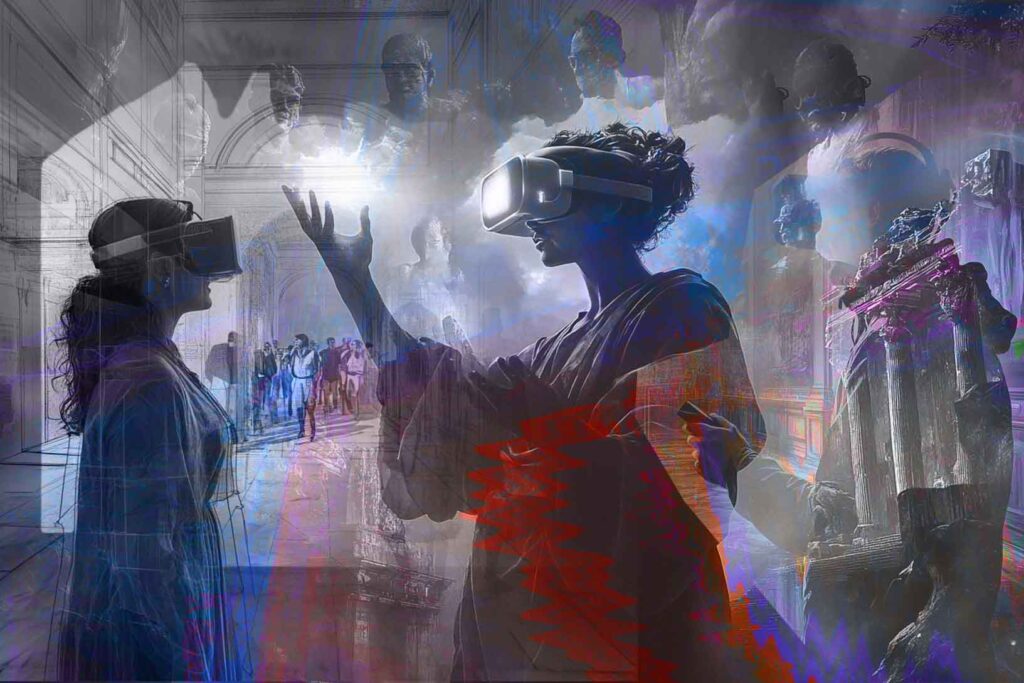
Beyond usability, ethical dilemmas proliferate. Digitizing sacred or sensitive heritage without proper consultation raises questions of cultural sovereignty. Virtual reconstructions may inadvertently commodify or trivialize solemn historical events. The line between preservation and appropriation is thin—and easily crossed when economic incentives drive digitization without community engagement.
Algorithmic bias in AI-driven reconstructions compounds these risks. Models trained on Western art datasets may misrepresent non-Western artifacts, projecting homogenized aesthetics onto diverse cultural forms. Similarly, 3D reconstruction tools often rely on interpolative techniques that "fill in gaps," introducing speculative elements that may distort historical authenticity.
The risk of misinterpretation is further heightened by the immersive medium itself. When visitors interact with hyper-realistic environments, they may conflate simulated narratives with verified history. This presents an epistemological challenge: how to distinguish between evocative experience and factual accuracy in digital heritage contexts.
There is also a loss of what researchers term the "purity of media experience." Immersion, while engaging, may detract from the materiality of heritage—its texture, scale, and context. Excessive digital embellishment can reduce rich cultural layers to spectacle, displacing the contemplative encounter with performative consumption.
Uncharted Risks and Systemic Gaps
Emerging use cases have exposed new risks. Improper lighting during immersive exhibitions can cause heat and light damage to physical artifacts. Noise and overcrowding during popular VR exhibits can create physical stressors for sensitive sites. Some heritage sites have already had to suspend immersive tours due to these unintended consequences.
Economic disparity further exacerbates global imbalances. Well-funded institutions deploy state-of-the-art immersive setups, while smaller heritage centers struggle to digitize even basic collections. This disparity risks creating a two-tiered system of digital cultural access—one for the elite, and one for the excluded.
Fragmentation of technological standards poses another systemic challenge. Without unified protocols for immersive content creation and preservation, digital archives face compatibility issues, undermining the longevity and accessibility of virtual heritage repositories.
Charting a Path Forward
To navigate these complexities, a multidimensional strategy is required. First, the development of ethical frameworks is imperative. These should emphasize consent, cultural context, and equitable representation in all stages of digitization and immersive design. International collaboration is needed to establish standards for content authenticity, attribution, and preservation.
Second, greater investment in accessible and open-source immersive platforms can mitigate the digital divide. Lightweight AR apps, portable VR headsets, and mobile-first experiences can democratize access to cultural content.
Third, interdisciplinary partnerships—linking technologists, curators, educators, and local communities—are key to sustainable implementation. These collaborations must prioritize not just technical sophistication, but cultural literacy and inclusivity.
Finally, the immersive heritage sector must embrace reflexivity: continuously evaluating not just what is possible, but what is responsible. As tools become more powerful, so too must the principles guiding their use.
Conclusion: The Digital Custodians of Memory
Immersive technologies are redefining the boundaries of cultural heritage—not only how we see the past, but how we carry it forward. They enable unprecedented preservation, foster global dialogue, and inspire new forms of storytelling. Yet their power must be tempered by ethical foresight and cultural sensitivity.
As we build the digital bridges to our ancestral pasts, the task ahead is not merely technological—it is philosophical. It is a question of how we choose to remember, represent, and revere the legacy of human civilization. Immersive tools may change the medium, but the message must remain rooted in respect, authenticity, and shared stewardship.
Reference
Wang, Hanbing, Junyan Du, Yue Li, Lie Zhang, and Xiang Li. "Grand Challenges in Immersive Technologies for Cultural Heritage." Preprint. arXiv. Last modified February 16, 2025. https://arxiv.org/abs/2412.02853.