
Animals like bees, ants, and starlings work together in large groups. They follow simple rules to act as a group, called a hive mind. A hive mind is when many individuals act together without complex thinking. Humans, however, work together differently. They understand each other’s thoughts and guess what others will do. This ability is called Theory of Mind, which means predicting someone’s actions by understanding their intentions.
Researchers from Duke and Columbia Universities found a new way to teach robots to work together like humans. They call it HUMAC, short for Human-Machine Collaboration. Unlike other methods that make robots act like a hive mind, HUMAC uses a single human coach to guide robots. The coach shows robots how to work as a team for complex tasks. This research will be presented at a robotics conference in Atlanta.
How HUMAC works and its results
Other ways to teach robots teamwork have flaws. Reinforcement learning makes robots learn by trying tasks millions of times, which takes too long. Imitation learning needs many human experts, which is expensive. HUMAC is different. A human coach briefly controls robots during training, like a soccer coach giving tips. The coach guides robots at key moments to teach them smart teamwork, like surrounding or ambushing. After training, robots learn to predict teammates’ and opponents’ moves, using Theory of Mind.
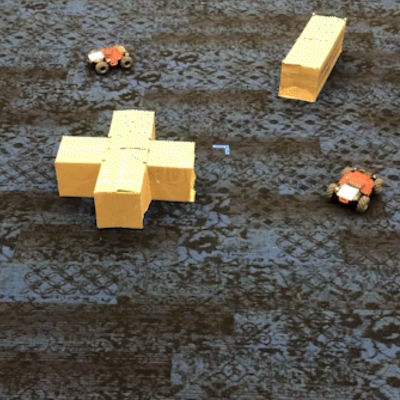
The researchers tested HUMAC in a hide-and-seek game. Three seeker robots chased three faster hider robots in an arena with obstacles. Without teamwork, seekers caught hiders only 36% of the time. With HUMAC, a coach trained the robots for 40 minutes. The robots then worked together, ambushing and encircling hiders. Their success rate rose to 84% in simulations and 80% with real robots. The robots acted like true teammates, moving without direct orders.
This could help in tasks like fighting wildfires or searching for survivors, where robots must work together in tough conditions. Researchers plan to improve HUMAC for larger robot groups and tougher jobs, making human-robot teamwork faster and better. This approach shows robots can become adaptive teammates, combining human and AI strengths for smarter solutions.