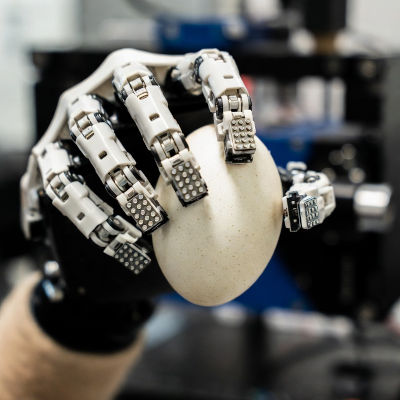

When we pick up something fragile, our hand uses touch to feel if it's slipping or too tight, then adjusts the grip right away. This natural skill is hard for robots, which often crush or drop things. Researchers from Tsinghua University have developed a new method to help robots learn this from humans. They used sensory-control synergy, which combines sensing touch with deciding how to act, like how humans do. In a study published in National Science Review, they explain how robots can use touch data to recognize if a grasp is stable or not, then change their hold quickly.
To start, they made a glove with special sensors on the fingertips. These sensors capture different kinds of touch information while a person grabs objects. The glove records data on contact, sliding, and force. This data helps teach the robot.
Bio-inspired grasping framework
The main new idea is how they process this touch data. Instead of using every tiny detail, they turn it into simple states, like "stable" (firm hold), "slightly unstable" (small slip), or "highly unstable" (big risk of dropping). This is inspired by how the human brain understands touch without getting bogged down in details. It makes the method work for many objects without needing huge amounts of data.
They also added a fuzzy logic controller that uses rules such as "if unstable, grip harder." This lets the robot act fast. The whole setup transfers easily to a robot hand with its own sensors. Tests showed the robot could handle slippery umbrellas, fragile eggs, heavy bottles, and even new items it hadn't seen before. It succeeded 95.2% of the time on average, and in moving tests, it tightened its grip against pulls or slips without help.
In a real task, the robot brewed coffee by finding tools, scooping powder, stirring, and serving, using touch to deal with surprises. This approach teaches robots the logic behind human grasps, not just copying moves, so they can adapt widely. It opens doors for robots in everyday jobs where things vary.