
Creating a new research hypothesis is tough and can take a lot of time. MIT researchers have developed an artificial intelligence (AI) system to help scientists generate and check these hypotheses faster, especially in biologically inspired materials.
A paper published in Advanced Materials introduces a system called SciAgents, which uses multiple AI agents. Each agent has a specific job and can access data. They work together using graph reasoning, where AI models use a knowledge graph to connect different scientific ideas.
This method is inspired by how biological systems work, where many simple parts come together to do complex tasks.
AI models like large language models (LLMs) are good at answering questions but not at creating new ideas. The MIT team used these models to go beyond just recalling information. They built a knowledge graph from many research papers, which helps AI models think more like scientists by focusing on relationships and principles.
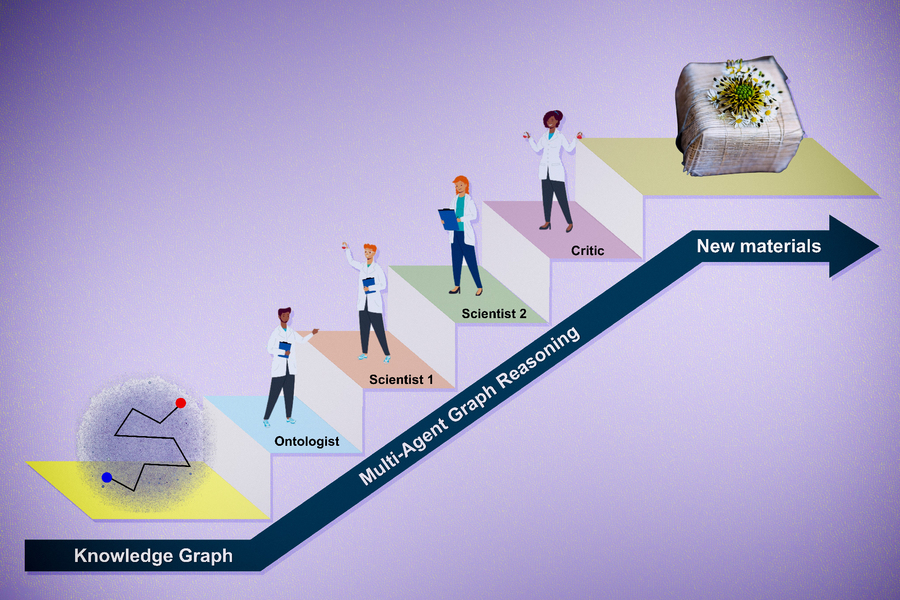
In SciAgents, different AI models have roles like "Ontologist," which defines terms and links concepts, and "Scientist 1," which makes research proposals. "Scientist 2" expands these ideas, while a "Critic" model points out flaws for improvement. This teamwork leads to better, more creative hypotheses.
Thousands of new research ideas for biomaterials
For example, the MIT researchers have explored silk and energy efficiency, proposing new biomaterials combining silk with dandelion pigments. SciAgents suggested simulations and applications, like bioinspired adhesives.
In other tests, SciAgents generated original hypotheses about biomimetic microfluidic chips, collagen-based scaffolds, and graphene-based bioelectronic devices.
“The system was able to come up with these new, rigorous ideas based on the path from the knowledge graph,” says researcher Alireza Ghafarollahi in an MIT press release. “In terms of novelty and applicability, the materials seemed robust and novel. In future work, we’re going to generate thousands, or tens of thousands, of new research ideas.”
The researchers plan to add more tools for data retrieval and simulations, making the system even better as AI technology advances.