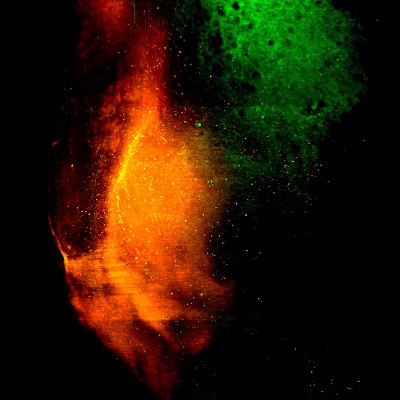

Neuroscientists at Johns Hopkins Medicine have reactivated a specific memory circuit in the brains of laboratory mice.
The scientists stimulated neurons to reactivate a spatial memory and tested the successful reactivation of the memory circuit by causing the mice to seek out shelter when no shelter is actually present.
The neuroscientists have detailed the research methods and results in a paper published in Nature Neuroscience.
“When we artificially reactivate those memory circuits in the brain, it triggers the mouse to do the same thing it did naturally, even without the fear stimuli that cause them to seek shelter to begin with,” says research leader Hyungbae Kwon in a Johns Hopkins University School of Medicine press release.
First, the scientists allowed the mice to explore a box with a shelter to form a mental map of their surroundings, and stimulated the mice to seek shelter.
Then, the scientists removed the shelter and activated shelter memory neurons with a system called Cal-light, which Kwon co-developed in 2017 at Max Planck Florida Institute for Neuroscience. Cal-light allows to control the activity of neurons with light. The scientists report that the mice sought out the area of the box where the shelter had once been, when neither the original threat nor the shelter were present.
“The Cal-light system allowed us to selectively tag a specific function in the brain, helping us to map out memory on a cellular level,” says Kwon.
The findings advance understanding of how memories are structured in the mammalian brain. The envisioned applications include the development of new methods to slow down or prevent memory loss in human patients with neurodegenerative diseases.
Engineering memory
Eventually, Kwon says as reported in the press release, "this research could provide a foundation for reactivating or engineering memory circuits in people with Alzheimer’s."
The possibility to edit memory circuits and even engineer new ones is especially intriguing. These findings seem to indicate that one day, and perhaps soon, we'll be able to engineer human memory just like we engineer computer memory.
