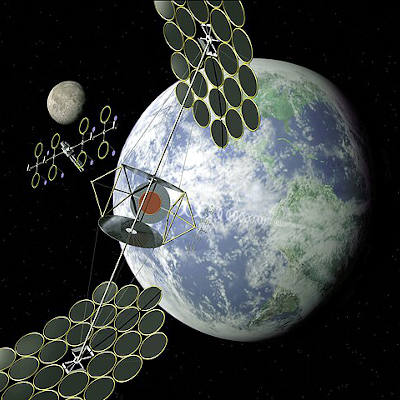

A British company called Space Solar and an Icelandic company called Transition Labs are planning to give Iceland electricity from space. They plan to build a space-based solar power (SBSP) plant, which means they'll put solar panels in space to catch sunlight.
Solar panels turn sunlight into electricity. When these panels are in space, they can work all the time because there's no night or clouds to block the sun. This is different from solar panels on Earth, which only work when it's sunny.
Space Solar and Transition Labs are working with Iceland's electricity company Reykjavik Energy. They've agreed to start sending power down to Iceland by the year 2030. This would be the first operational SBSP plant to send energy from space to use on Earth.
The initial SBSP plant would generate 30 megawatts (MW) of power. A megawatt is a lot of electricity, enough to power many homes. But the companies wouldn't stopping there; they want to make even bigger plants by 2036 that could send back gigawatts (GW) of power. A gigawatt is a thousand megawatts, so that's a lot more electricity.
To get the electricity from space to Earth, the SBSP plant would send high-frequency radio waves down to special antennas on Earth. These antennas would catch the waves and turn their energy back into electricity that we can use.
The promise of SBSP
John Mankins covers SBSP concepts and technologies in detail in his book “The Case for Space Solar Power” (2014).
This idea of getting power from space might sound like science fiction, but it is an actual possibility. It could give us a way to get energy without needing fossil fuels like coal or oil, which are bad for the environment. Of course there are big challenges, first and foremost the fact that sending equipment into space is still expensive. But the costs are going down.
People are excited about this because it could change how we get our energy, making it cleaner and possibly cheaper over time and providing yet one more compelling argument in support of space operations.