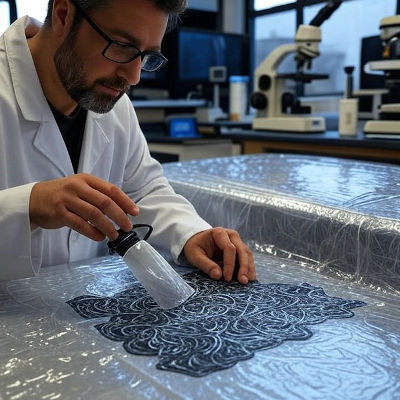

Researchers have created a new type of ink made from a material called MXene. MXene is a two-dimensional material, meaning it is very thin, like a sheet of paper, but only a few atoms thick. MXenes conduct electricity well, can interact with water, and have a layered structure. These properties make them excellent for use in energy storage devices, such as supercapacitors. Supercapacitors are devices that store energy and can release it quickly, unlike batteries, which release energy more slowly. However, making MXene into a stable ink for printing has been difficult because it breaks down in water and requires specific properties to work with printing machines.
The researchers developed an MXene ink that stays stable for over six months without degrading. This ink works well with aerosol jet printing. Using this ink, the researchers printed small supercapacitors on materials like flexible plastic films and hard ceramic tubes. These printed devices stored energy effectively, lasted through many charge-discharge cycles, and were physically strong. They performed better than any other printed MXene supercapacitors made before.
Breakthrough in Device Fabrication
This work is a big step forward for making electronic devices in a simpler, more affordable way. The ink’s stability and the precision of aerosol jet printing make it possible to produce devices like sensors and energy systems on a large scale. Sensors are devices that detect changes, like temperature or motion, and are used in things like smartwatches. The printed supercapacitors are lightweight and flexible, perfect for wearable electronics, such as fitness trackers, or Internet of Things devices, which connect everyday objects to the internet. The global market for supercapacitors is growing fast, especially in cars, gadgets, and renewable energy, because they are efficient and versatile.
The new ink allows printing complex designs with very fine details, opening the door to sustainable production methods. This research, published in Small Methods, supports efforts to create eco-friendly electronics and could lead to new ways of making small, powerful energy devices for future technologies.