
Waves, such as light or sound, can overlap and either strengthen or weaken each other, much like ripples on water. This overlapping, called interference, happens at the quantum level and helps create precise tools for measurement or computing.
In a recent study, researchers at Rice University showed a strong version of interference using phonons (quantized vibrations in a material). They found a effect called Fano resonance, where two phonons with different vibration speeds interfere, and it was 100 times stronger than seen before.
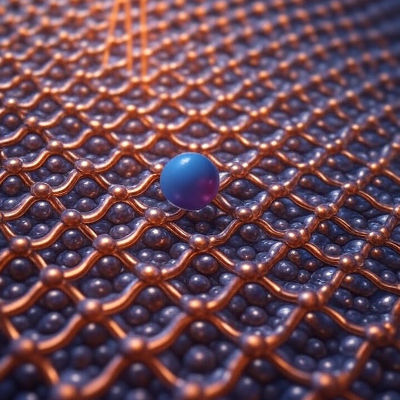
This kind of interference is common with particles like electrons or photons, but less studied with phonons. Phonons can hold their wave-like behavior for a long time, making them useful for reliable devices. The breakthrough came from placing a very thin, two-dimensional metal on a base of silicon carbide, a hard material used in electronics. Researchers slipped a few layers of silver atoms between graphene (a single layer of carbon atoms) and the silicon carbide, creating a tight bond with special quantum traits.
The thin metal layer sparks and boosts interference among different vibration modes in the silicon carbide.
How the interference works
To observe this, the scientists used Raman spectroscopy, a tool that shines light on a material to measure its vibrations. The results showed uneven shapes in the vibration signals, sometimes with a full drop called antiresonance, a sign of very strong interference. This effect changes based on the silicon carbide's surface finish, and adding just one dye molecule altered the signal sharply. Such sensitivity allows detecting a single molecule without labels or fancy equipment, useful for simple chemical sensing.
Tests at low temperatures confirmed the interference comes only from phonons, not electrons, a rare pure-phonon quantum event. It appears only in this setup with the ultra-thin metal, thanks to unique paths for vibrations at the surface. Other thin metals, like gallium or indium, could create similar effects by adjusting the layers' makeup for custom properties.
This phonon method beats traditional sensors in sensitivity while staying simple, aiding fields like energy capture, heat control, and quantum tools where managing vibrations matters.