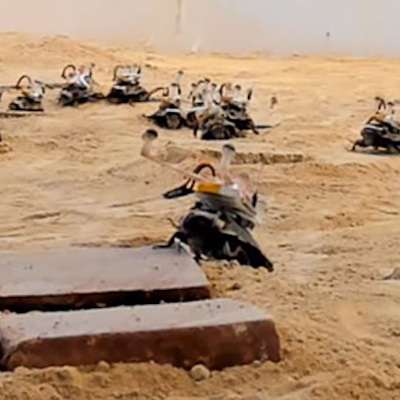

Scientists from NTU Singapore, Osaka University, and Hiroshima University have created a new algorithm for guiding swarms of cyborg insects. This system helps these insects avoid getting stuck on tough landscapes. The scientists have published their findings in Nature Communications. This could change how we do things like searching for people after disasters and checking buildings for damage.
Cyborg insects are insects with small electronic devices on their backs. These devices include cameras, batteries, and antennas for talking to each other. For tasks like finding people after an earthquake, one cyborg insect isn't enough, but a group of cyborg insects could help with rescue operations.
The new method uses one insect as a leader to guide the others. The insects move freely, helping each other if one gets stuck.
Semi-autonomous units with occasional guidance
In previous work by the researchers, each insect got detailed instructions, but that didn't work well for large groups. Now, the leader knows where to go and helps the others follow. The insects, which are Madagascar hissing cockroaches, carry a backpack with sensors and a battery. These devices use tiny shocks to guide the roaches while letting them use their natural movement to navigate.
In tests, this new way reduced how much the insects needed guiding by half. This means they could work over obstacles better. The researchers see this technology being used for tasks where robots can't go, like in narrow or damaged areas. When the sensors on an insect detect something important, they can send a signal back to base.
According to the researchers, this new control method could make disaster responses faster and open new research paths. The new method doesn't try to control the insects too tightly. The researchers found the cyborg insects could work together in complex ways, showing there's still much to learn from nature. The team plans to test this system in outdoor settings, like disaster rubble, and make the insects work together on more complex tasks.