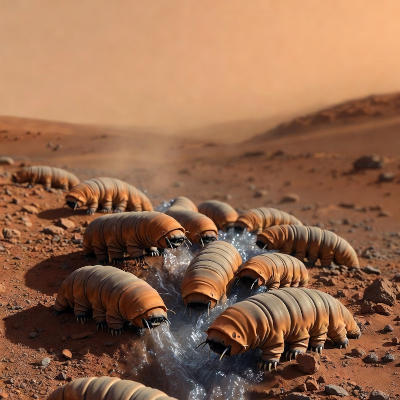

Microscopic animals called tardigrades, also known as water bears, can survive extreme conditions such as the vacuum of space. A new study shows they provide clues about using resources on other planets for space missions. The animals’ activity dropped sharply when placed in a fake version of Martian soil known as regolith. This loose mineral layer covers a planet’s bedrock and is similar to soil on Earth. One type of simulated regolith, called MGS-1, proved especially harmful, slowing the tardigrades within two days. The other type, called OUCM-1, caused less trouble.
Washing the more damaging soil with water removed the harmful substances, likely salts or other compounds, and almost fully restored normal movement. Tardigrades have two main states: active, when they move and feed after rehydration, and dormant, when severe drying allows them to endure freezing cold or other stresses. The study tested only active animals to measure direct effects from the soil.
Insights into planetary protection
Planetary protection means rules agreed by many countries and space agencies, including NASA, to stop Earth germs from polluting other worlds and to prevent any return contamination to Earth. It also keeps scientific findings pure. The research suggests Martian regolith may naturally block Earth microbes, which could simplify mission planning. At the same time, the ability to wash away toxins means the same material could later support plant growth or human bases without causing damage. Water is scarce on Mars, so the washing step is not perfect, but it adds useful knowledge.
The findings, published in the International Journal of Astrobiology, come from work led by Penn State Altoona. Researchers also plan to test other factors such as air pressure and temperature. Overall, the study helps separate helpful and risky parts of the Martian surface for future exploration.
“With this research, we’re looking at a potential resource for being able to grow plants as part of establishing a healthy community," say the researchers, "but we’re also looking at whether there are any inherent damaging conditions in the regolith that could help protect against contamination from Earth, which is a goal of planetary protection.”