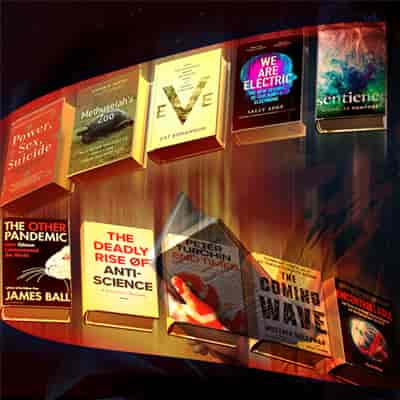

Looking for a guidebook to help you navigate our changing world?
Has the pace of change in the 21st century got you disorientated?
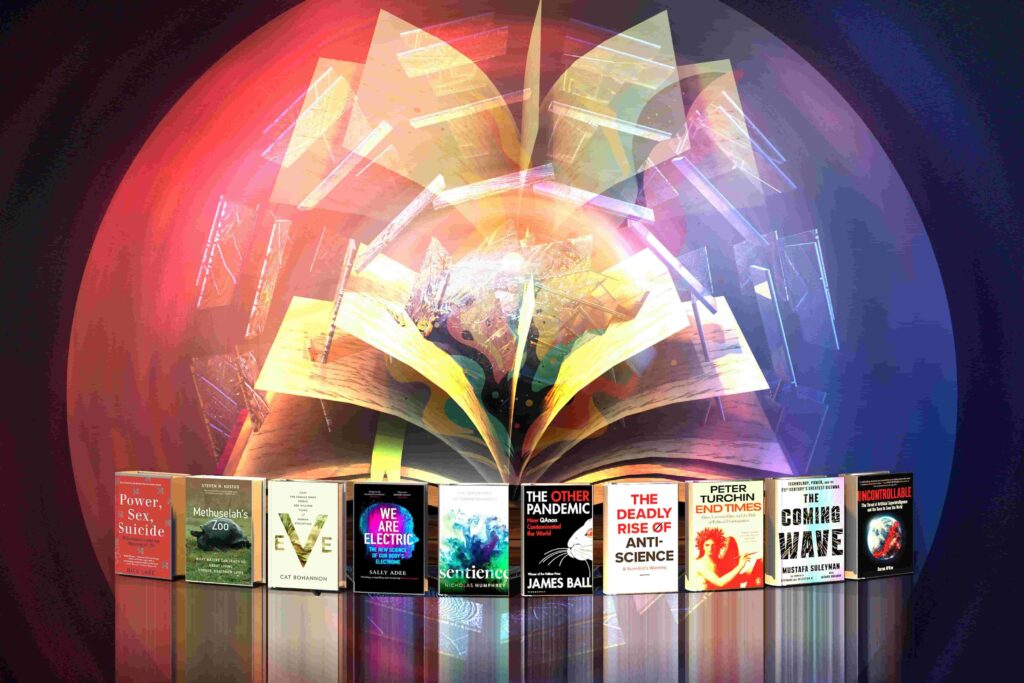
Let me draw your attention to ten books I’ve read recently. They each deal with the development of technology in the present and the near future, and its effects on society. Each of them are eye-opening and thought-provoking in their own ways. Indeed, they might change your life path, so beware!
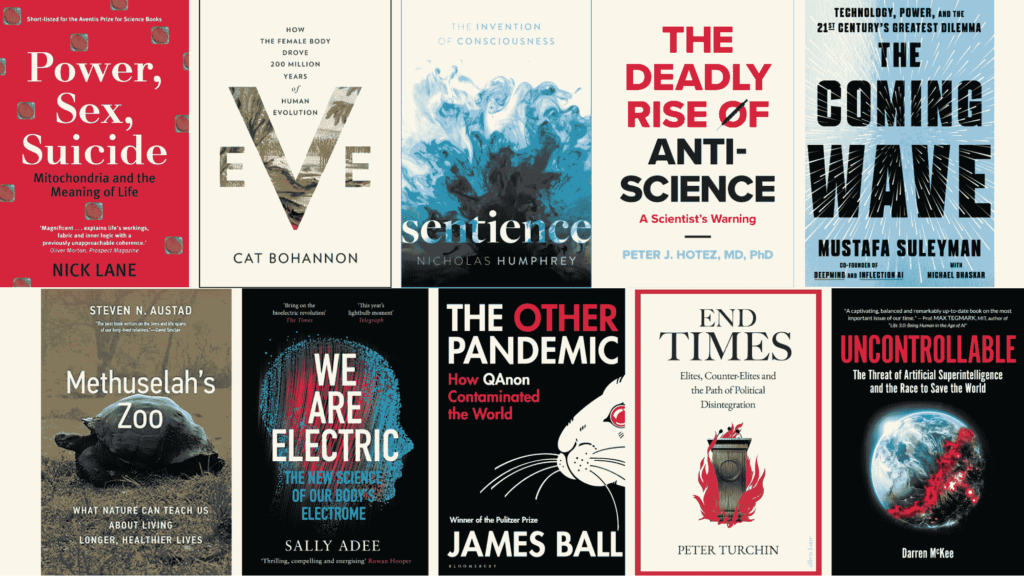
1) Power, Sex, Suicide: Mitochondria and the meaning of life. By Nick Lane.
Fascinating account of the remarkable (and unlikely) evolutionary journey from non-life to modern warm-blooded life. With plenty of insights along the way regarding energy, sex, aging, and death. You'll wonder why you never knew about this before.
2) Methuselah's Zoo: What nature can teach us about living longer, healthier lives. By Steven Austad.
A different view regarding what animals can teach us about aging. Many animals live longer, healthier lives than any simple theory would predict – this book explains why and considers the implications for human aging, and for what kind of studies rejuvenation researchers should prioritize.
3) Eve: How the female body drove 200 million years of human evolution. By Cat Bohannon.
Milk. The womb. Menopause. Perception. Tools. Voice. The brain. Love. When you look at the long span of evolution from a female perspective, many things fall into place in an inspiring new way. A welcome reminder that our approach to science often suffers from being male-centric.
4) We Are Electric: The new science of our body's electrome. By Sally Adee.
A look at biology from a fascinating alternative angle. The electricity throughout our bodies is involved in more processes than we previously thought. Move over genome, epigenome, and biome: make way for the electrome.
5) Sentience: The invention of consciousness. By Nicholas Humphrey.
Why did evolution give rise to phenomenological consciousness? How can we detect and assess consciousness throughout the animal kingdom? And what are the implications for AIs that might be sentient? Lots of captivating biographical asides along the way.
6) The Other Pandemic: How QAnon contaminated the world. By James Ball.
Evolution has produced not just intelligence and beauty but also viruses and other pathogens. Mental pathogens (‘memes’) have lots in common with their biological analogues. That's one reason why the whole world may be on the point of going crazy.
7) The Deadly Rise of Anti-Science: A scientist's warning. By Peter Hotez.
Part of the growing wave of social irrationality is a determined virulent opposition to the patient methods and hard-won insights of science. Millions have already died as a result. There may be worse ahead. What lies behind these developments? And how can they be parried?
8) End Times: Elites, counter-elites, and the path of political disintegration. By Peter Turchin.
Can we ever have a science of history? Is that idea a fantasy? This book argues that there are important patterns that transcend individual periods of revolutionary turmoil. However, there's no inevitability in these patterns, provided we are wise and pay attention. You'll never look at history the same way again.
9) The Coming Wave: Technology, power, and the 21st century's greatest dilemma. By Mustafa Suleyman.
Current debates about the safety of powerful AI systems should be understood in wider context: economic, political, and historical context. Following a full diagnosis, a ten-stage multi-level plan provides some grounds for optimism.
10) Uncontrollable: The threat of artificial superintelligence and the race to save the world. By Darren McKee.
Will powerful AI systems pose catastrophic risks to humanity? Are you, as an individual, helpless to reduce these risks? Read this book to find out. Written compellingly, with particular clarity.