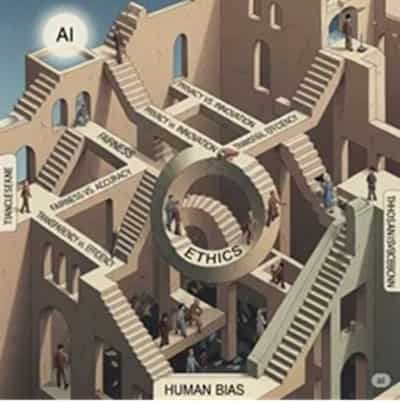

What can we learn going forward for an Alliance 2.0
We cannot solve humanity’s problems with the same level of consciousness as that from which we created them
Michael Reuter
The Irony: The Artificial Superintelligence Alliance (SingularityNET, Fetch.ai, and Ocean Protocol) was conceived as a grand experiment in decentralized AGI. Yet it fell to the same forces it sought to transcend: opaque decisions, unchecked treasuries, and egos orbiting the Sun of power. They invoked collaboration yet merged without trust. They spoke of the democracy of minds while enacting the same autocracy that the founders had created, which the movement was born to resist.
The result: a noble dream turned inside-out, a decentralized vision undone by power struggles.
The very alliance that set out to decentralize superintelligence, to free AI from corporate capture and guide it toward human flourishing, collapsed under the weight of its own centralization, with its members exhibiting the very traits they were challenging https://www.altcoinbuzz.io/cryptocurrency-news/ocean-protocol-the-asi-alliance/
The irony is rich: a decentralized vision fracturing due to disputes over centralized token moves…
Ocean claims its treasury and community funds were sovereign and independent; Fetch.ai claims those same funds were allied property and must be governed jointly. Managing the tension between sovereign foundation governance and collective alliance governance wisely was key, and that’s where they failed. (My Organic Governance book chapter in “From Bitcoin to Burning Man and Beyond” offers several ways to manage this tension using “the logic of holonic systems”.
The Overarching Goal
The ambition of a unified AI-crypto stack (via ASI and the ASI Chain) is enormous, aiming to weave the cognitive layer (AI) and the economic layer (crypto) into a single self-governing substrate, something that, if it works, could redefine how intelligence and value co-evolve on a planetary scale. The “Global Brain” dream that Dr. Ben Goertzel fostered along his career realized at last: a self-organizing, economically coherent, globally distributed superintelligence. Delivering it requires breakthroughs in interoperability, security, governance, and collective-intelligence design, which no ecosystem has yet achieved.
The ASI Chain aims to enable agents, data, and AI services to interoperate natively through a single ledger and token. This implies a common identity, reputation, and payment layer for humans, machines, and models, representing a significant leap from the current siloed Web3 or cloud AI infrastructures. Integrating three entire domains of infrastructure: AI computation, data markets, and autonomous-agent coordination, each with its own technical stacks, consensus mechanisms, and economic models, into a unified stack that would need to handle high-throughput AI inference, decentralized storage, micro-transactions, and staking incentives simultaneously, essentially building a “world computer for intelligence”, is no easy feat! Not to mention the cross-protocol coordination and governance challenges: aligning open-source communities, token treasuries, and corporate entities under a single protocol requires robust governance, along with creative legal and regulatory engineering. It’s not just code integration but the merger of entire institutional cultures.
The Unintended Consequences
However, this feud highlights the downside risk: token supply shocks, governance breakdown, regulatory/intermediary interference with exchanges, and halting deposits. How this gets resolved (returns of tokens, legal verdicts, and arbitration transparency) will set a precedent for future “coalition intelligence” models where multiple organizations pool infrastructure, tokens, and governance. There are lessons to learn and takeaways for the future of decentralization.
For decades, Dr. Ben Goertzel has been one of the most visionary voices advocating for decentralized AGI: a world where intelligence evolves as a distributed, collaborative network rather than a proprietary tool of corporate or state power. Through SingularityNET / SingularityNET Ambassadors he aimed to establish the first truly decentralized AI ecosystem, a marketplace of algorithms, agents, and data unified by open protocols and collective ethics. His aim was nothing less than to democratize the future of intelligence: to ensure that the rise of AGI would serve humanity as a whole rather than a narrow elite. This is why I joined and supported his movement wholeheartedly since 2017.
However, in accepting the ASI Alliance merger without clear governance statutes or mechanisms of accountability, he inadvertently violated the very ethos he championed: the principle that no single entity should exercise unchecked control over the trajectory of Superintelligence. The irony is profound: in seeking collaboration to accelerate Beneficial AGI, the movement momentarily slipped into the same pattern of opaque, top-down decision-making it was created to transcend. (I have at once seen through this when the Alliance was announced to the SingularityNET community to which I belong: a rushed, “uncooked” deal meant to merge tokens without a properly thought-out governance foundation. It was more than disconcerting.)
We were called to vote, and I voted AGAINST.
The merger of tokens without a merger of values turned a revolution of consciousness into a liquidity stunt. Value became valuation. Instead of uniting to build truth machines (as per Michael Casey), the alliance united to pump market optics. What was meant to merge technologies that accelerate decentralized superintelligence became a theater of speculation. When I voted against the merger, I thought sadly to myself: “When governance becomes a performance rather than a practice, the architecture of truth collapses.”
… and now we see the effects…
At this point, although the legal battle continues, it is worth asking: Was SingularityNET better off not merging? In hindsight, under the 2024–2025 terms, as I am aware from the public information, the answer is clearly Yes! By staying independent, SNET would likely have avoided exposure to the Ocean–Fetch treasury dispute dynamics, exchange frictions, and the reputational spillover from public allegation cycles. Not merging might have meant slower shared liquidity and fewer “one-token” narratives, but it would have resulted in far less governance contagion risk. Given the actual breakdown, the net would likely favor non-merger or, at least, delay merger until on-chain guardrails and auditability were enforceable.
The eventual benefits the merger sought to achieve: unified liquidity/branding (FET→ASI), as well as cross-ecosystem momentum, hinged on impeccable treasury rules and shared enforcement, which the alliance didn’t meet.
One year ago, in October 2024, I was invited to Keynote the Superintelligence Summit, sponsored by Ocean Protocol, alongside SingularityNET, where Dr. Ben Goertzel and Trent McConaghy were also speakers. In my Keynote, “Out of the Matrix in the Era of the Singularity”, I spoke of the role of decentralization, making the point that we expected blockchain to be a catalyst for this transformation in governance, yet what came of it? A speculative “winner takes all” sham playing by the same rules as the centralized world… And I called for the Alliance to stand as an example for how the power of Blockchain should be rightfully used.
You cannot build “Beneficial AGI” if your governance models reproduce the same extractive logic you denounce. You cannot solve humanity’s problems with the same level of consciousness as that which has created them, as Michael Reuter rightfully states in his book The Mindful Revolution.
Why It Broke: The Elementary Governance Failure
While announcements and posts referring to a signed “ASI Token Merger Agreement” are publicly available, I could not locate a full governance agreement, including treasury control, escalation pathways, and signed foundations’ responsibilities, in any public records. The existence of conflicting interpretations (foundations claiming different rights over assets) suggests the agreement either lacked clarity or wasn’t sufficiently transparent.
Could this collapse have been avoided? Here is an analysis of the (quite elementary) governance failure, with lessons learned and takeaways for those who want to build the future of decentralized governance. The thread that runs through it all: control over the shared funds wasn’t clearly locked down, neither by smart contracts nor by legal agreements, and there was no ready plan in place for what to do if things went wrong. The very technologies developed by the Alliance could have been utilized to establish a morally sound governance foundation for this crucial endeavor, fostering a better future for humanity.
The weakest links
1. Who owns the “community” money?
Each group (Fetch.ai, SingularityNET, and Ocean Protocol) had its own treasury of tokens. When they merged, it was never clearly or legally written down who controlled the combined pool. So, when Ocean moved a huge amount of tokens, Fetch said, “You can’t do that, that’s joint money!” and Ocean said, “Yes, we can, it’s ours.” When stress hit, Ocean asserted its “community tokens” were controlled by Ocean Expeditions (its trust) rather than by a pooled ASI treasury, colliding with public expectations of a single, joint token stack (AGIX/OCEAN → FET → ASI). This ambiguity sat at the heart of the split and was formalized when Ocean withdrew from the Alliance on October 9, 2025.
If the Blockchain is the “Truth Machine” *and* a “technology of freedom”, (per Prof. Chris Berg's book and Keynote at our recent BGI 25 Summit), then why wasn’t it used to avoid this conundrum?
Lessons Learned:
- They should have signed and coded an explicit agreement, both on paper and on the blockchain, spelling out who owns what, who can move what, and under what conditions. Before day one of a token merger, adopt a legally binding charter and a matching escrow/timelock smart contract that explicitly defines: which assets are sovereign vs. pooled, who can move what, and under which thresholds/windows.
- Neutral co‑custody: Requires two‑of‑N cross‑foundation signers + independent trustee for any treasury movement beyond routine allowances.
Takeaway: One contract, clear limits, live visibility. That’s how you stop token swaps from turning into a trust crisis.
2. Lack of Transparency
All token swaps should have gone through a single public smart contract, displaying the amount, owner, and reason for the move, allowing everyone to view it on-chain in real-time.
On‑chain analyses alleged a wallet linked to Ocean converted ~661 M OCEAN → ~286 M FET in mid‑2025 and routed large tranches to CEX/OTC. Ocean denied wrongdoing and said the assets were lawfully held. Nobody outside Ocean knew the reason or timing. Even if it was legal, it looked shady and wrecked trust. The $250k bounty to identify multisig signers shows the opacity gap. Strong design would require pre-agreed visibility, roles, and audit schedules for signers.
Lessons Learned:
- Use one shared conversion system. All token swaps should be conducted through a single, transparent smart contract that is auditable by everyone. It would show exactly who converted tokens, how many, and why, so there’s no mystery or hidden transfers.
- Set clear limits and timing rules. Each organization should have a maximum amount it can convert (a “cap”) within a certain period, at a fair average market price. No surprise conversions during off-hours or volatile days. If anyone needs an exception, all partners must publicly approve it on-chain.
- Let everyone see what’s happening in real time. Build a public dashboard connected to that contract, allowing the community to view token flows live, much like a flight tracker for the treasury. Transparency would have prevented rumors and panic.
Takeaway: If they’d had a simple “stop-and-audit” rule, freeze first, verify facts fast, the fight might have been contained before it blew up into a public mess.
3. Lack of an effective way for dispute resolution
When the accusations began, there was no pre-agreed method to verify the facts quickly, nor a clear process for freezing wallets, auditing transactions, or determining who was right. Instead, they argued in public for weeks, and prices crashed. By the time they discussed settlements (such as returning the 286 million FET), the damage was already done.
Lessons Learned:
- The “xx-hour rule”: Include in the alliance agreement that if anyone suspects a problem with money or token movements, all related wallets are frozen immediately for xx hours. During that time, an independent auditor checks the records and publishes a verified report. Everyone agrees in advance that this result is final and binding, thereby avoiding any further legal disputes.
- A clear emergency checklist. Have a ready-made plan that clearly outlines who is responsible for freezing the funds, who conducts the audit, what data is collected, and how long the process takes. Everything, from blockchain records to login keys, should be accessible for read-only inspection within hours, not weeks.
Takeaway: Agree upfront on a simple “stop-and-audit” rule, freeze first, verify facts fast.
4. Trial by social media
Instead of resolving issues privately, executives began posting accusations and rebuttals on X/blogs, hardening their positions and amplifying community panic, which subsequently drove prices down.
Lessons Learned:
- Establish a crisis-communication plan upfront, designating a spokesperson who can address the public only after both sides approve the message.
Takeaway: Handle disputes privately and speak with one voice, not a dozen “he said / she said” tweets.
5. Problem with exchanges in the middle of the crisis
To add wood to the fire, Binance stopped accepting OCEAN token deposits on the Ethereum network (ERC-20), which confused users, reduced liquidity, and made the situation worse when the market needed calm.
Lessons Learned:
- Coordinate in advance with exchanges. Before any significant token change or migration, the alliance should have a written agreement with exchanges, for example, stipulating that Binance must provide xx hours’ notice before altering deposit options and that any announcement would be a joint message from both Binance and the alliance to avoid panic.
- Backup options (“fallback rails”). They should have maintained at least two active deposit routes (such as different blockchains or bridges) with automatic monitoring. If one route failed, a pre-approved backup plan and public message could go out instantly.
Takeaway: Always plan with exchanges in advance and have backups, so one surprise move doesn’t throw everything into chaos.
6. Too much reliance on one token, without clear, coded rules
The entire merger centered on FET as the primary token, Phase 1, which would later be renamed ASI, Phase 2 (as per ). This meant that all the value flowing through FET became the bridge for every partner in the alliance. However, the rules for converting tokens (who could do it, when, and how much) were never clear, nor were they enforced in smart contracts (at least, I could not find any public documents regarding this matter). When the price dropped, everyone began to suspect the others of manipulating conversions or taking an unfair advantage.
Lessons learned:
- Hard-code the rules: Put clear limits, waiting periods, and price protections directly into the blockchain contracts, not just on paper.
- Require joint approval for emergencies: Any pause or change should need sign-off from multiple parties, including a neutral third party.
- Show proof of funds: Publish regular public reports showing all alliance wallets and transactions so everyone can verify the balances themselves.
Takeaway: If the conversion rules had been locked into code and made visible to the public, there would’ve been no room for suspicion or finger-pointing when the market turned volatile.
7. No plan for an exit
When Ocean finally left on October 9, 2025, there were no preset rules for how to leave fairly or how to unwind the shared assets. The departure itself created new confusion and legal risk.
Lessons Learned:
- Pre‑negotiated unwind clause: Bake in a clean separation path: asset reversion rules, domain/brand unbundling, migration stop conditions, and who speaks when.
- Time‑boxed mediation window (xx days) before any party may announce an exit.
Takeaway: Have written a “prenup agreement”/“divorce clause” upfront, stating exactly how assets, tokens, and public communications would be handled if one partner left.
The Overarching Lesson
When the Alliance was shaken, it revealed a more profound truth about our time: Technology cannot save us from ourselves unless it also encodes our ethics. Decentralization is not a brand; it is a discipline! It is the slow, often uncomfortable art of ceding control, of embedding trust not in personalities, but in transparent processes, not in speeches but in smart contracts.
The ASI Alliance collapsed not because of technology failure, but because governance wasn’t thought out with the same rigor as the code. Clear rules, transparency, and effective crisis planning would have maintained trust.
Until AI governance itself becomes trustless and transparent, until alliances encode truth and ethics into the brilliant contracts that bind them, we will continue to replay the same paradox: preaching decentralization from the top of skewed centralized structures.
The Lesson: The Alliance relied on good intentions rather than code, contracts, and clear crisis protocols. Treasury‑level powers were not bound tightly enough, and the alliance lacked a hard‑wired, time‑boxed crisis playbook, so when trust cracked, there were no automatic brakes, no neutral fact‑finder, and no quiet room to solve it before markets and social media took over. Simply put, when trust broke, there were no safety rails, and the whole thing unraveled in public.
What Would Conscious Leadership Do Now?
Out of this collapse, something more luminous than even the initial vision can be created, like the Phoenix rising from the ashes of a failed choice. Remember: decentralization without virtue breeds entropy; decentralization guided by intrinsic values breeds flourishing
I propose a next-generation governance redesign framework tailored for AI-blockchain alliances of the future, specifically for a reborn ASI 2.0 structured as a layered system, leveraging the very power of the technology that the ASI develops: the ASI chain and AI agents, blending rigorous cryptoeconomics with the ethos of truth, trust, and transparency.
Modus Operandi: Treat every contract and vote as a ritual of trust creation.
a. Structural Foundation: Code-Enforced Trust
Replace gentlemen’s agreements with executable governance logic:
- Constitutional Smart Contracts: Immutable “alliance charter” specifying ownership, treasury rights, and exit clauses as on-chain law.
- Programmable Treasury: Multi-DAO architecture (each member DAO controls its vault), federated through a parent Alliance DAO that executes only joint decisions.
- Dynamic Vesting & Conversion Protocol: Token mergers or swaps occur via pre-audited contracts enforcing caps, vesting timelines, and proportional liquidity sharing.
- Proof-of-Integrity Oracles: Continuous feeds verifying that wallet flows, treasury balances, and signer identities match declared states (every block audited).
b. Governance Layer: Polycentric Intelligence
No single foundation dominates: Poly-Cameral Governance Model.
- Founders Chamber: One seat per founding organization.
- Developers Chamber: Weighted voting by active contributors' merit (on-chain reputation).
- Citizens Chamber: Token-weighted or soulbound-ID-verified community votes.
Policy passes only when ≥ 2 chambers approve → checks and balances in code.
- Algorithmic Mediation Layer: AI agents trained on alliance rules detect conflicts, propose resolutions, and trigger arbitration smart contracts before human escalation.
- On-Chain Arbitration Courts: Utilize protocols (such as Kleros or Aragon Court) for binding dispute resolution, featuring pre-funding, time-bound, and transparent processes.
c. Governance AI Assistants
- Constitution-bound: Fine-tuned models interpret the alliance constitution and flag rule violations in real time.
- Explainable Decision Trails: Every vote or recommendation is accompanied by a traceable reasoning chain (audit-ready).
- Self-Improving Governance: Governance agents evolve via reinforcement from community feedback.
d. Transparency & Communication Protocols
Governance is visible as a living public process (“flight-tracker”-style display)
- Real-Time Governance Dashboard: Displays proposals, votes, treasury data, and signers’ attestations. No private backrooms.
- Publish a weekly digest of decisions and rationale for public comprehension.
- Crisis Response Module: Detects sentiment shocks or anomalies and automatically triggers the “calm & clarify” protocol with verified facts.
e. Economic *and* Ethical Alignment: Moral Governance
Encode the values we wish the Superintelligence to reflect.
- Intrinsic-Value Oracle: Aggregates multi-source data (SDGs, well-being indices, open-knowledge metrics) into on-chain signals, weighting funding and rewards toward flourishing outcomes.
- Impact-Weighted Treasury Allocation: Grants or liquidity routed by algorithmic evaluation of positive-sum outcomes.
- Sybil-Resistant Reputation Graphs: Participation, transparency, and verifiable contribution yield moral-reputation scores, influencing voting weight more than raw tokens.
- Ethical Kill-Switch: Multisig and AI watchdogs that can freeze or revert malicious governance proposals violating encoded principles (e.g., corruption, deception).
f. Blueprint for a Future-Proof Resilient Design
-Fork-without-Fracture Protocol: Clear exit-and-continuity rules: any sub-DAO may fork code and treasury clone under public oversight, preventing hostage situations.
- Periodic “Constitutional Conventions”: Every 18 months, the alliance pauses for reflection to revise values, metrics, and incentives.
- Inter-Alliance Interoperability: Shared governance APIs allow collaboration across AI ecosystems without central capture.
Epilogue: Toward an Alliance 2.0 with Governance as a Moral Technology
From the ashes of misalignment, a new constellation can emerge. The crisis of the ASI Alliance presents an opportunity for a new alliance to emerge as the Phoenix Protocol, forged in transparency, sustained by accountability, and guided by wisdom.
The recent ASI Chain Economics of Decentralized Intelligence paper represents a significant step in this regard. The whitepaper dedicates a full section to risk analysis, detailing how the architecture withstands liquidity crises, governance attacks, and black swan events.
Time-locked parameter changes prevent flash governance takeovers. Cross-shard insurance and protocol-owned liquidity stabilize markets during panics. Volume validation filters wash trading by only rewarding genuine activity, making manipulation unprofitable. And the ultimate safeguard (hibernation mode) halts emissions entirely during extreme downturns, freezing inflation and preserving reserves.
These pioneering visionary advances offer a framework where intelligence itself becomes self-financing, where AI networks learn to sustain their own growth, and where tokenomics evolve from human-devised systems into autonomous economic organisms.
So, clearly, this is not the death of a dream but the exposure of its missing soul. It revealed, with almost mythic clarity, that technology without consciousness corrodes, and decentralization without virtue fragments. Suppose the first alliance fell into the gravity well of haste and hubris. In that case, the next must orbit a higher principle: Governance as a Moral Technology, not a market game, but a living discipline that encodes truth, transparency, and shared purpose directly into the nervous system of the network.
In Alliance 2.0, code becomes covenant, contracts become rituals of trust, and tokens evolve from instruments of speculation into instruments of stewardship. Smart contracts become smart conscience, and AI agents become custodians of collective integrity, continuously auditing, mediating, and realigning our systems with the values we profess.
When governance itself becomes intelligent, when truth is verifiable, virtue executable, and transparency effortless, the dream of a decentralized superintelligence will no longer be a paradox, but a living expression of humanity’s maturity.
So let us rebuild, not from ambition, but from alignment; not from haste, but from harmony.
Let Alliance 2.0 be the first civilization template to treat governance as sacred code, the architecture of wisdom for an age where intelligence and conscience finally meet.