
Scientists at MIT have developed nanoparticles to help treat cancer. These particles carry drugs and can deliver them right to cancer tumors. This method reduces the harsh effects of chemotherapy, which often causes side effects because it attacks healthy cells too.
The scientists use a method called layer-by-layer assembly. This means they add thin coatings, or layers, to the nanoparticles one by one. Each layer can hold drugs or special molecules that guide the particles to cancer cells. Tests in mice show these particles can fight cancer well, especially ovarian cancer.
In an MIT press release, research leader Paula Hammond says these nanoparticles offer great hope. She explains that recent successes in animal tests excite her group. However, making enough particles for human use has been a challenge. The old way took too long and made only small amounts.
A faster way to make nanoparticles
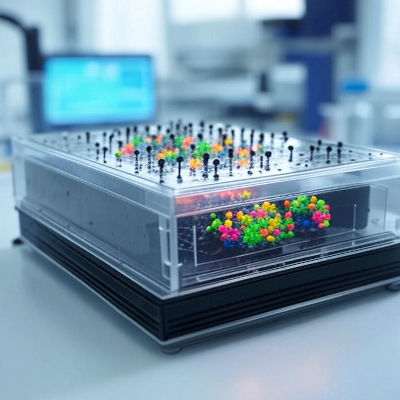
To solve this, the researchers invented a quicker manufacturing method. They now use a device called a microfluidic mixer. This tool lets them add layers to the nanoparticles as the particles flow through a tiny channel. They figure out exactly how much coating to use, so no extra steps are needed to clean the particles. This saves time and money. The new method follows strict safety rules set by the FDA, the government agency that approves drugs. These rules, called good manufacturing practice, ensure products are safe and consistent.
With this approach, the researchers can make 15 milligrams of nanoparticles in minutes. That’s enough for about 50 doses. The old method took almost an hour for the same amount. To test the new system, they loaded the particles with a drug called interleukin-12. This drug boosts the immune system, which helps the body fight cancer. In mice with ovarian cancer, these particles slowed tumor growth and even cured some cases.
A paper published in Advanced Functional Materials describes this research.
The researchers hope to start a company to bring this treatment to people, starting with cancers in the belly, like ovarian cancer.