
Unlocking the Code: Are Transformers the Master Keys of AI?
Transformers are the chameleons of the artificial intelligence world. They power everything from ChatGPT's conversational skills to impressive image generation, adapting to almost any task we assign them. We use these powerful models every day, but that raises an exciting question: how powerful are they? Is there a theoretical limit to what they can learn, or are we just starting to explore their capabilities? It’s like driving a supercar without knowing its true top speed. A group of researchers from Google and MIT decided to take a closer look, investigating whether Transformers are "universal approximators," which means they have the potential to learn almost anything.
What Does "Universal Approximator" Even Mean?
Imagine you had a universal remote that could learn to control not just your TV but also your microwave, your garage door, and even your neighbor's toaster (with their permission, of course!). A "universal approximator" is the AI equivalent. It’s a model with enough theoretical power to approximate any continuous function to any desired degree of accuracy. This doesn’t mean it can learn everything perfectly or instantly, but it does indicate that, given enough capacity and training, its potential is nearly limitless. Proving that a model has this property is a big deal—it shows that the architecture itself isn’t holding us back from what AI can achieve.
The Dynamic Duo: Self-Attention and the Feed-Forward Layer
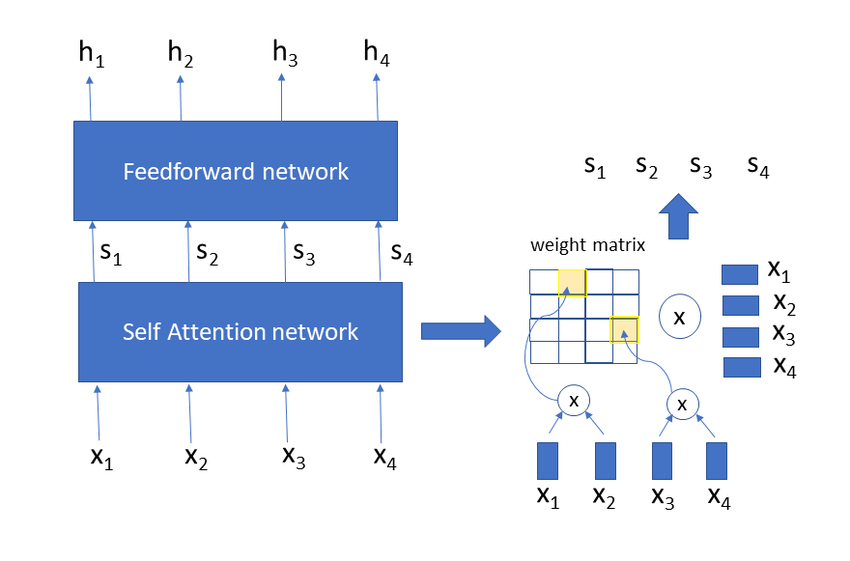
The secret to a Transformer’s power lies in the teamwork between its two main components. Think of them as a two-person detective team.
First, there’s the self-attention layer—the lead investigator. Its job is to create "contextual mappings." Simply put, it figures out how each word in a sentence relates to every other word. For example, the word "bank" means something very different in "I’m going to the river bank" versus "I’m going to the money bank." The self-attention layer helps the model understand this context, giving each word a unique, context-rich identity.
Next, the token-wise feed-forward layer acts like the analyst back at the office. It takes that rich contextual information and processes it to produce the final output. It doesn’t worry about the context anymore—that’s already been handled. Its job is to execute the task, whether that’s translating a sentence, summarizing a paragraph, or answering a question.
Why Position Matters: The Role of Positional Encoding
Language isn’t just about the words themselves, but also the order they come in. Without knowing the position of each word, a sentence could become a meaningless jumble. This is where positional encoding comes in. It’s like adding page numbers to a book—without them, the words would lose their order and meaning. The researchers showed that adding positional information allows Transformers to handle sequences properly, breaking free from the limitation of treating input words as just a set without order. This step is what truly makes Transformers “universal approximators” of language and other sequential data.
From Theory to Practice: What This Means for AI
This theoretical insight is more than just an academic breakthrough—it’s the foundation for the powerful AI tools we use every day. Understanding that Transformers can approximate any sequence-to-sequence function explains why models like ChatGPT, translation apps, and voice assistants work so well. It also points the way toward creating more efficient AI. In fact, the researchers experimented with replacing some of the Transformer’s self-attention layers with simpler convolutional layers and found that these “hybrid” models sometimes performed even better. This suggests future AI could be faster and less resource-intensive without losing power.

Important to Remember: Limits of Universal Approximation
It’s worth noting that “universal approximator” is a theoretical concept. It means Transformers can learn any function given enough resources and training, but it doesn’t guarantee perfect results right away. Real-world success depends heavily on data quality, training methods, and computational power. Think of it like having a supercar with the potential for high speeds—you still need a skilled driver and good roads to reach that top speed safely.
Conclusion: Opening the Door to Smarter AI
This exploration into the theoretical foundations of Transformers moves us beyond simply using them to truly understand them. The researchers showed that the model’s power comes from the partnership of self-attention and feed-forward layers, combined with positional encoding to preserve order. These insights help demystify why Transformers are so effective and open exciting new possibilities for designing smarter, faster, and more efficient AI systems.