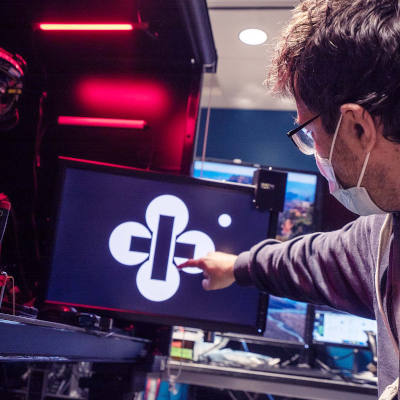

An illusion happens when the brain sees something that does not match the actual light and shapes entering the eyes. For example, four black shapes like open Pac-Man figures can trick the mind into seeing a white square floating above them. Researchers at UC, Berkeley, with experts from the Allen Institute, pinpoint the brain circuit and cell type that spots these illusion edges, called contours, and explains how it functions. The study is published in Nature Neuroscience.
The researchers studied specific neurons that help the brain complete patterns. These neurons pick up sights from the world and pass signals to higher areas. The higher areas guess what the full image might be and send signals back. This feedback fills in the gaps, leading to seeing the illusion.
These neurons stand out because they can spark pattern completion strongly. They get directions from higher brain levels, where the illusion idea forms first, then relay it to the primary visual cortex. It works like a boss giving orders to a basic worker: the high-level brain says to see a square, even if the eyes only catch four half-circles.
The group spotted this by watching electrical signals in mice brains. They used two-photon holographic optogenetics, a light-beam method to zap specific neurons. This sparked the same brain patterns as real illusions, proving these neurons drive the effect.
Shifting from passive to active sight
The work hints at fixes for brain issues where sight goes wrong. In schizophrenia, odd shapes appear in the mind without reason, tied to faulty object signals. Knowing which cells and layers cause this helps treatment. Some tests came from the Allen Institute's OpenScope program, which lets outside scientists use advanced gear for brain scans. It gave Berkeley access to wide brain recordings with Neuropixels probes, tiny tools that track signals across areas with fine time detail.
These results flip old ideas of vision as just soaking up the world like a camera. Instead, it is active, built by brain math and past know-how, more like a screen showing computed scenes. This opens ways to tweak what people see, with big ties to health and how minds shape reality.