
Water on the moon likely built up slowly over billions of years instead of arriving all at once in a single large event. This is the main finding from a new study published in Nature Astronomy. An international group of scientists took part in the study.
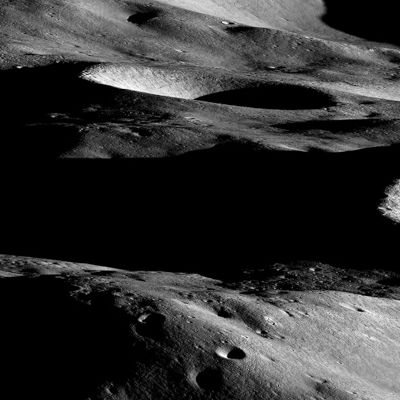
The research addresses a long-standing puzzle. Spacecraft observations have shown signs of water ice trapped in deep, dark craters near the moon’s south pole. These spots can remain extremely cold for billions of years, allowing ice to collect without evaporating.
The study ruled out the idea that a giant comet delivered all the water in one crash. Instead, the oldest craters contain the most ice. This pattern suggests the moon has gathered water gradually for as long as 3 to 3.5 billion years.
Possible sources include ancient volcanoes that released water from inside the moon, impacts from comets or asteroids, and solar wind. Some solar wind particles can combine with oxygen on the lunar surface to form water.
The scientists used temperature data from NASA’s Lunar Reconnaissance Orbiter and computer models to study how craters and their shadows have changed over time. The moon’s tilt relative to Earth has shifted in the past, so some craters entered permanent shadow only after long periods. The darkest, oldest craters showed the strongest signs of ice.
Evidence from long-term shadows
The patchy distribution of ice now makes more sense. Craters that have stayed coldest the longest hold more ice. One promising site is Haworth Crater near the south pole, which has likely been in shadow for over 3 billion years. Future astronauts could mine this ice for drinking water or to make rocket fuel by splitting it into hydrogen and oxygen.
More detailed observations are still needed. A new instrument called the Lunar Compact Infrared Imaging System is planned for deployment near the south pole in late 2027 to gather better data. In the end, collecting actual samples from the moon will be required to settle the question of where the water came from.