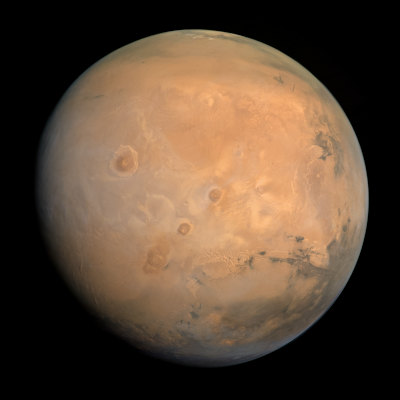

A recent study led by Erica Luzzi, a planetary geologist and postdoctoral researcher at the Mississippi Mineral Resources Institute, found signs of water ice close to the surface of Mars. Published in the Journal of Geophysical Research: Planets, this discovery could provide water for future human missions. Water is vital for drinking, making fuel, and other needs on Mars. Finding it near the surface makes it easier to collect, a process called in situ resource utilization, which means using local materials for space exploration.
The research used high-resolution images from a satellite camera called HiRISE, the most detailed camera ever sent to another planet. These images showed the Amazonis Planitia region, located in Mars’ middle latitudes, where ice lies less than one meter below the surface. This area is a potential landing site for humans because it gets enough sunlight for power while staying cold enough to keep ice stable. The images revealed craters and patterns in the soil, like polygonal terrain, which are signs of ice just underground. Some craters had softened edges, likely caused by sublimation, when ice turns directly into vapor.
Supporting life and exploration
Water ice on Mars could supply drinking water, oxygen for breathing, and fuel for rockets, reducing the need for supplies from Earth. Mars is far away, and resupply missions could take months, unlike trips to the Moon, which take about a week. Ice might also hold clues about life. On Earth, ice can preserve signs of past life, called biomarkers, or support tiny microbes. This makes the ice important for astrobiology, the study of life in space, as it could show if Mars was ever habitable.
To confirm the ice is pure water and not mixed with other materials, a rover or human mission is needed. The next steps include using radar to measure the ice’s depth and how it’s spread. The soil covering the ice, called lag deposit, might affect whether the ice stays preserved. Understanding this will help pick the best spots for robots or humans to land. While humans are still years from walking on Mars, this discovery points to where those first steps might be, making future exploration more possible.